How stress accumulates in the body is often misunderstood, because stress is usually described as something that happens only in the mind. In reality, stress accumulates in the body long before it is recognized as a conscious thought.
Muscle tension, shallow breathing, and subtle discomfort often appear gradually and may go unnoticed at first. For this reason, understanding how stress accumulates in the body is an essential first step toward releasing it in a gentle and sustainable way.
How Stress Accumulates in the Body Over Time
Over time, chronic stress can make it difficult to relax your nervous system and fully slow down physically or emotionally.
Stress does not usually appear all at once. Instead, stress accumulates in the body gradually through repeated moments of pressure, urgency, or emotional strain.
Over time, stress stored in the body may create several physical signs of stress, including headaches, jaw tension, low energy, digestive discomfort, and difficulty relaxing fully.
When the body perceives a stressful situation, the nervous system activates. As a result, muscles tighten, breathing patterns change, and the body prepares for action. This response is natural and protective.
However, when you experience stress frequently, the body does not always return to a state of rest. Over time, it stores tension instead of releasing it, and stress accumulates in the body without being fully noticed.
You can explore a broader approach to stress management in our complete guide.
How Stress Accumulates and Is Stored in the Body
After long periods of stress, the body never fully relaxes automatically. In many cases, tension can remain stored in the nervous system even during moments of rest.
In short-term situations, the body is designed to respond to stress temporarily. However, in modern life, many stressors continue over time rather than appearing as brief, isolated events.
Deadlines, emotional responsibilities, and constant stimulation can keep the nervous system activated for long periods. As a result, the body often stores stress instead of processing and releasing it.
Therefore, it is more helpful to understand stress accumulation not as a personal failure, but as a natural physiological adaptation.
However, understanding stress is only the first step. You can also learn ways to reduce stress and feel more balanced.
Common Areas Where Stress Accumulates in the Body
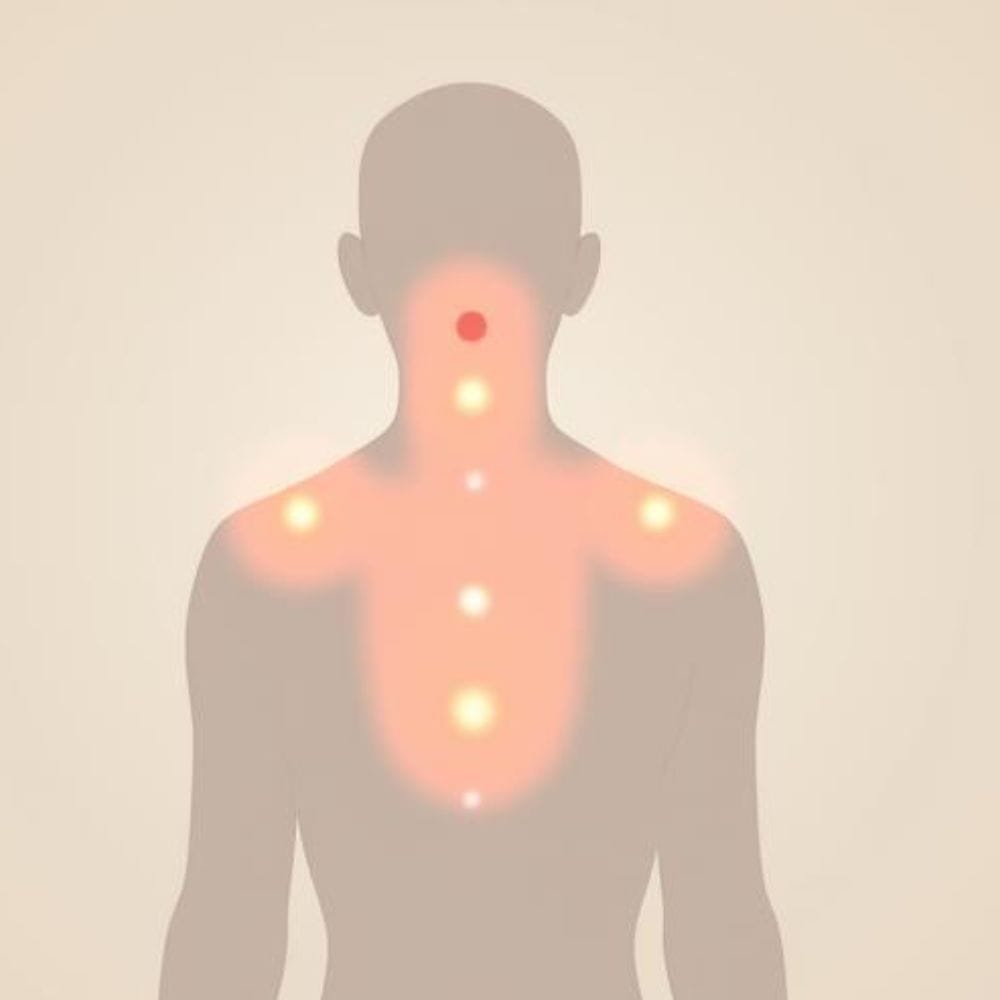
Although each person experiences stress differently, certain patterns tend to appear in the body.
The Neck and Shoulders
Tension in the neck and shoulders often appears during prolonged mental effort and responsibility. As stress accumulates in the body, these muscles remain in a semi-contracted state, often without conscious awareness.
The Jaw and Face
People often clench the jaw or tighten facial muscles when they suppress emotions or hold back reactions. Over time, this tension can become habitual.
The Chest and Breathing Area
When the body experiences stress, breathing often becomes shallow. As a result, the chest may feel tight or restricted, especially during periods of anxiety.
The Lower Back and Hips
The body also tends to hold long-term stress in the lower back and hips. These areas are closely connected to feelings of stability and safety.
Why We Often Miss How Stress Accumulates in the Body
One of the reasons stress accumulates so effectively is that the body adapts.
Discomfort is normalized.
Subtle tension becomes familiar.
Busy routines prevent awareness.
As a result, stress signals may only be noticed when they intensify or when physical symptoms appear.
Therefore, the absence of awareness does not mean the absence of stress.
The Nervous System and How Stress Accumulates in the Body
At the center of stress accumulation lies the nervous system.
When the nervous system remains in a state of alert for extended periods, it reduces signals of safety. As a result, muscles stay tense, digestion may become affected, and the body delays its natural recovery processes.
For this reason, you do not release stress through force or correction. Instead, you support its release by creating conditions in which the body can feel safe again.
How Stress Accumulates in the Body and Affects Daily Wellbeing
Understanding how stress accumulates in the body helps explain why tension often feels persistent and difficult to release.
When the body activates stress responses repeatedly, physical patterns begin to form. As a result, discomfort can appear even during calm moments, because the body learns to remain alert. Over time, this accumulation influences energy levels, mood, and overall wellbeing.
Once you understand how stress builds up, the next step is to learn how to relax your body from stress.
Gentle Ways to Begin Releasing Tension
Stress release does not need to be intense in order to be effective.
In fact, the body often responds better to gentle approaches.
Awareness Before Action
Before applying any technique, notice the tension.
For example:
Where do you feel tightness right now?
Can you observe it without judgment?
Often, tension begins to soften simply when you acknowledge it.
Breathing as a Signal of Safety
Breathing patterns connect closely with the nervous system.
When you allow the exhale to become slightly longer than the inhale, the body receives a signal of calm. As a result, muscles can begin to relax naturally.
This process does not require effort, only attention.
Small Movements Instead of Stretching
Rather than deep or forceful stretching, small and slow movements can be more effective.
Gentle movements help the body release tension without feeling threatened. As a result, the body gradually rebuilds trust.
Moments of Stillness
Stillness can feel uncomfortable when stress has been present for a long time.
However, short and intentional moments of rest can help the nervous system recalibrate.
Even one minute of quiet presence can begin to shift internal states.
Why Gentle Approaches Are More Sustainable
Aggressive methods are often based on the idea that the body needs to be fixed.
However, this perspective can increase resistance.
In contrast, gentle practices are based on cooperation. Over time, they help the body feel supported rather than corrected.
As a result, changes tend to be deeper and longer-lasting.
Stress Release Is an Ongoing Process
Stress does not accumulate overnight, and it does not release all at once.
Some days may feel lighter, while others may feel unchanged.
Nevertheless, each moment of awareness contributes to gradual regulation.
Therefore, measure progress in sensitivity rather than speed.
By learning how stress accumulates in the body, awareness can replace confusion, and small changes can begin to feel meaningful.
Understanding how stress builds up is the first step. The next step is learning how to release it gently from the body.
How Stress Accumulates in the Body in Everyday Life
Stress often accumulates through small, repeated patterns in everyday life.
For example, rushing through tasks, holding tension in the body or ignoring emotional signals can gradually increase internal pressure. Over time, this can affect both your physical and mental wellbeing.
However, understanding how stress builds up is only the first step. You can also learn simple ways to reduce stress and feel more balanced in your daily life.
Final Reflection: How Stress Accumulates in the Body
The body is not holding tension by mistake.
It has adapted to protect you.
By understanding how stress accumulates in the body, tension can be approached with curiosity instead of frustration.
In this way, the process of release becomes a relationship rather than a task.
If you would like to explore gentle practices for releasing tension more deeply,
you may find supportive resources inside the LiberaTen Academy.
To explore this topic more deeply, you can read our guide on Holistic Stress Management.