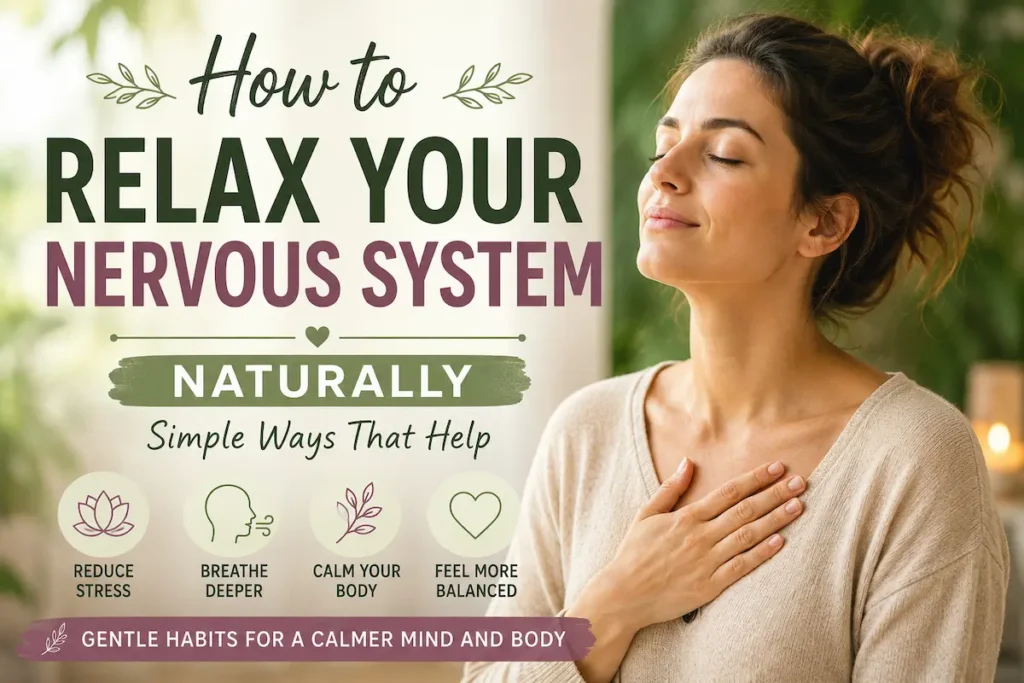
Learning how to relax your nervous system naturally can help the body feel calmer, safer, and less overwhelmed during stressful periods. Modern life often keeps the nervous system in a constant state of tension through stress, overstimulation, emotional pressure, and daily demands.
When this happens, it may become difficult to truly rest, slow down, or feel calm inside. Even small situations can feel overwhelming because the body is still responding as if it needs to stay “on guard.”
In short, learning how to relax your nervous system naturally does not mean forcing yourself to feel calm instantly. In many cases, it begins with small gentle habits that help the body feel safer, slower, and more balanced again.
Many people do not realize how stress accumulates in the body until physical tension, fatigue, or emotional overwhelm become difficult to ignore.
In this guide, you will discover simple ways to calm your nervous system naturally and support your body during stressful moments.
What Happens When You Cannot Relax Your Nervous System
Stress affects more than thoughts and emotions. It also affects the nervous system and the way the body reacts to daily life.
According to research about stress and the nervous system, long periods of stress can affect both emotional and physical health over time.
When stress continues for long periods, the nervous system may remain in a state of alertness. Breathing can become shallow, muscles may stay tense, and the body can struggle to fully relax.
Therefore, learning how to calm the body from stress can help the nervous system feel safer and more balanced over time.
Sometimes people notice:
- tension in the neck or shoulders,
- difficulty sleeping,
- racing thoughts,
- irritability,
- fatigue,
- or a constant feeling of pressure inside the body.
These reactions are not signs of weakness. They are often signals that the nervous system has been under stress for too long.
An overactive nervous system can contribute to constant muscle tension, making it difficult for the body to fully relax.
Muscle tightness is one of the most common physical responses to prolonged stress. Learn more in Stress and Muscle Tension: Why Your Body Stays Tight (and How to Release It).
Signs You Need to Relax Your Nervous System
Your body often gives you subtle clues when stress and stimulation have been building for too long. Recognizing these signs early can help you understand when it may be time to slow down, reduce unnecessary pressure, and give your nervous system more opportunities to return to a calmer state.
Feeling unable to relax your nervous system
One common sign of nervous system stress is feeling unable to fully relax. Even during quiet moments, the body may still feel tense or alert.
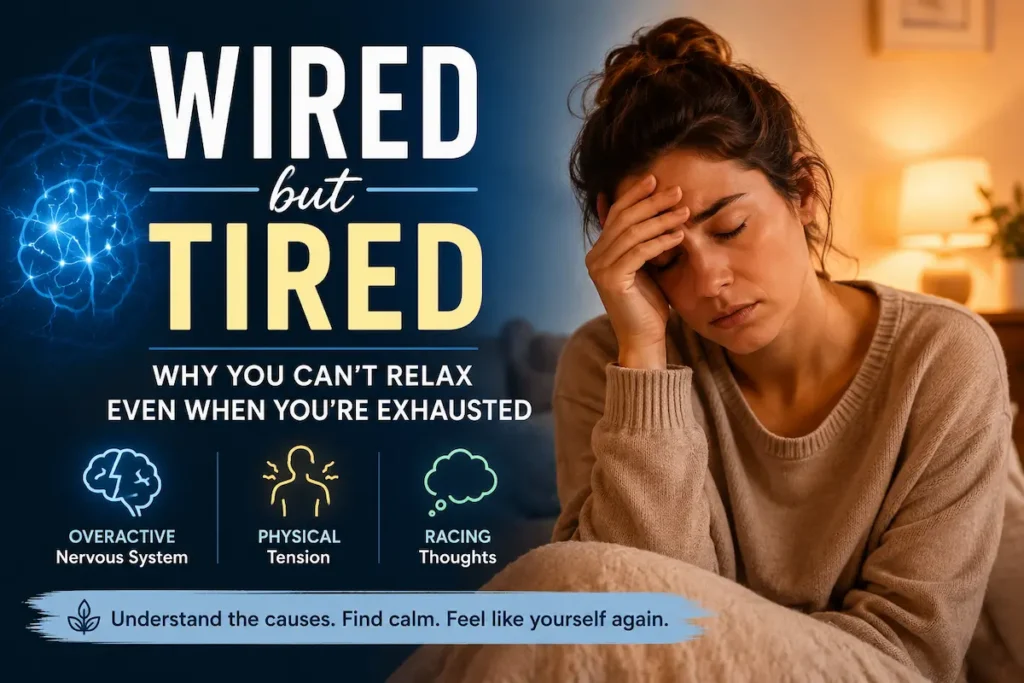
Sometimes this can leave you feeling tired but still unable to switch off, even when your body clearly needs rest.
Difficulty slowing down
Some people feel guilty when resting or become uncomfortable in silence. This can happen when the nervous system becomes used to constant stimulation.
Physical tension in the body
Stress and the nervous system are closely connected. In fact, emotional pressure can appear physically through tight muscles, headaches, jaw tension, or digestive discomfort.
Feeling emotionally overwhelmed
When the nervous system is overloaded, emotions may feel stronger and more difficult to manage. Small situations can suddenly feel exhausting.
When stress continues for long periods, physical signs of stress may begin appearing throughout the body. Muscle tension, fatigue, digestive discomfort, headaches, and shallow breathing are often connected to nervous system overload.
Simple Ways to Relax Your Nervous System Naturally
Many forms of physical tension are closely connected to an overactive nervous system.
Many people try to relax their nervous system only after stress becomes overwhelming. However, small daily habits can help support the nervous system before exhaustion appears.
If your body remains tense despite trying to relax, you may benefit from reading our article on feeling tense all the time and chronic stress.
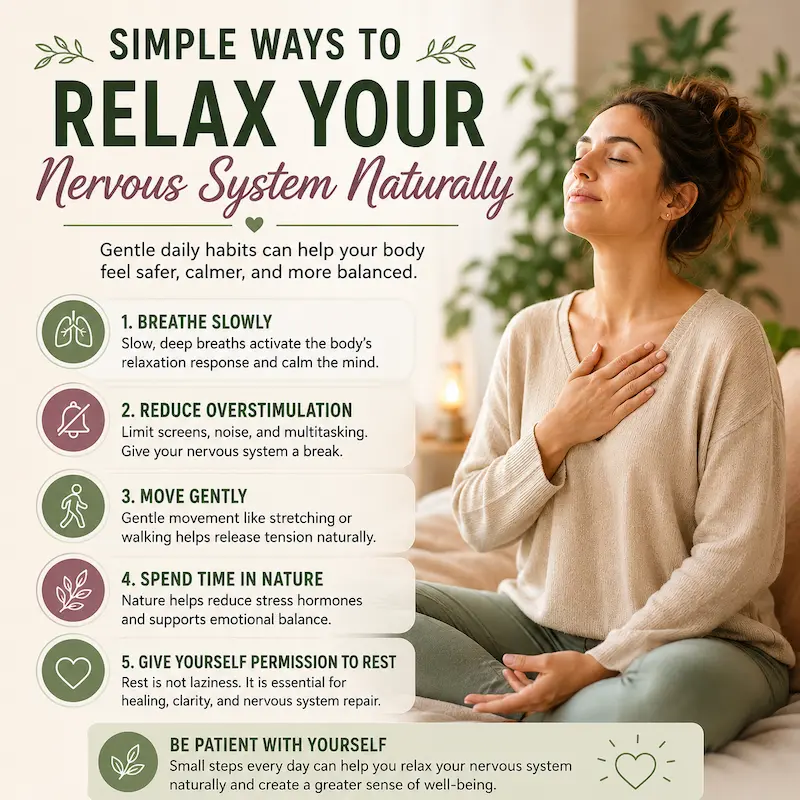
When the nervous system remains overloaded for too long, the body never fully relaxes and can stay in survival mode without realizing it.
Slow down your breathing gently
Breathing slowly can help calm the nervous system naturally. There is no need to force deep breaths. Even soft and steady breathing may help the body feel safer.
Try inhaling slowly through the nose and exhaling a little more slowly than usual.
Reduce overstimulation to relax your nervous system
The nervous system can become overwhelmed by constant noise, screens, notifications, and multitasking.
Creating small moments of quiet during the day may help reduce stress and give the body space to recover.
Simple stress management techniques can help reduce overstimulation and support emotional balance during difficult periods.
Spend time with slow physical movement
Gentle stretching, walking slowly, or mindful movement can help release tension from the body without adding more pressure.
Gentle movement, breathing, and rest can support the process of learning how to release stress from the body naturally.
The goal is not intense performance. The goal is helping the body feel calmer and more supported.
Give yourself permission to pause
Many people try to “push through” stress for too long. However, rest is not laziness. Small pauses during the day can help relax the nervous system and reduce emotional overload.
Building a few daily habits for stress relief can complement these techniques and help your nervous system feel more balanced.
Why Gentle Habits Help the Body Feel Safe Again
The nervous system responds strongly to safety, rhythm, and consistency.
Simple daily habits such as:
- slowing down,
- sleeping better,
- reducing overstimulation,
- spending time in nature,
- or creating moments of silence
can gradually help the body move away from constant stress mode.
Often, healing does not begin with doing more. It begins with creating conditions where the body no longer feels constantly threatened.
If you often ask yourself why am I always tired, your nervous system may be playing a larger role than you realize.
Final Thoughts
Learning how to relax your nervous system naturally is not about becoming perfectly calm all the time. Stress is part of life, and every body responds differently.
What matters most is creating gentle habits that support the body instead of fighting against it.
In many cases, listening to your body with more patience and awareness is the first step toward calming the nervous system.
Sometimes the smallest changes — a slower breath, a quiet pause, a moment of rest — can help the nervous system feel safer little by little.
Some people notice that relaxation remains challenging even after practicing calming techniques. Learn more about why relaxation is difficult after stress and how recovery takes time.
As your nervous system becomes calmer, it often becomes easier to release physical tension naturally. Explore our practical guide for gentle techniques that support this process.