When the body never fully relaxes, even simple moments of rest can feel incomplete. You may sit down, stop working, or even sleep for hours, yet still notice tension, discomfort, or a constant feeling of alert inside your body.
This often happens because stress does not only affect the mind. Over time, chronic stress and nervous system overload can keep the body stuck in survival mode without us fully realizing it. Muscles stay tense, breathing becomes shallow, and the nervous system struggles to feel safe enough to relax completely.
In this article, you will learn why the body never fully relaxes after long periods of stress, how tension accumulates in the body, and gentle ways to help your nervous system calm down naturally.
Why the Body Never Fully Relaxes After Chronic Stress
Many people believe that rest automatically relaxes the body. However, this is not always true. When stress lasts for weeks, months, or even years, the nervous system can become used to staying alert all the time.
This ongoing tension may contribute to chronic stress and fatigue, making it difficult to restore energy fully. You may even feel wired but tired—physically exhausted while your body still struggles to fully relax.
Why the Body Never Fully Relaxes During Stress
The body is designed to react to stress for short periods of time. But when stress becomes constant, the nervous system may remain in a protective state even when there is no immediate danger.
This is why the body never fully relaxes after chronic stress. The muscles, breathing patterns, and stress hormones can continue acting as if the body still needs to protect itself.
When this pattern has continued for a long time, learning how to recover from chronic stress can help you understand why returning to a calmer state may be gradual.
According to Harvard Health, chronic stress can affect both the body and the nervous system over time.
Why the Body Never Fully Relaxes Even During Rest
Rest is important, but the body may still hold tension during quiet moments. Some people notice that they wake up tired, clench their jaw without realizing it, or feel unable to fully relax their body even during vacations or weekends.
This often happens because chronic body tension has become part of the body’s normal stress response.
If you often notice that your neck and shoulders stay tense even while resting, our article Why Does Stress Make Your Neck and Shoulders Tight? explains why this happens and shares gentle ways to help your muscles relax naturally.
Signs Your Body Never Fully Relaxes During Rest
The signs are not always obvious. Sometimes the body stays tense in subtle ways that slowly drain energy over time.
Physical Signs of Body Tension and Stress
Common signs include:
- tight shoulders,
- neck tension,
- shallow breathing,
- jaw clenching,
- stomach discomfort,
- fatigue,
- or difficulty sleeping deeply.
These physical symptoms may appear even when life seems calm on the surface.
Many physical signs of stress may appear gradually through muscle tension, fatigue, headaches, digestive discomfort, or shallow breathing. Over time, the body may remain trapped in a constant state of tension without fully recovering.
Emotional Signs of Nervous System Overload
When the nervous system overload becomes chronic, emotional symptoms may also appear. You may feel irritable, emotionally exhausted, disconnected from yourself, or constantly overwhelmed without fully understanding why.
This can create the feeling that your body stays tense even during peaceful moments.
Persistent muscle tightness may also be related to constant muscle tension, a common response to chronic stress and nervous system activation.
What Happens When the Body Never Fully Relaxes
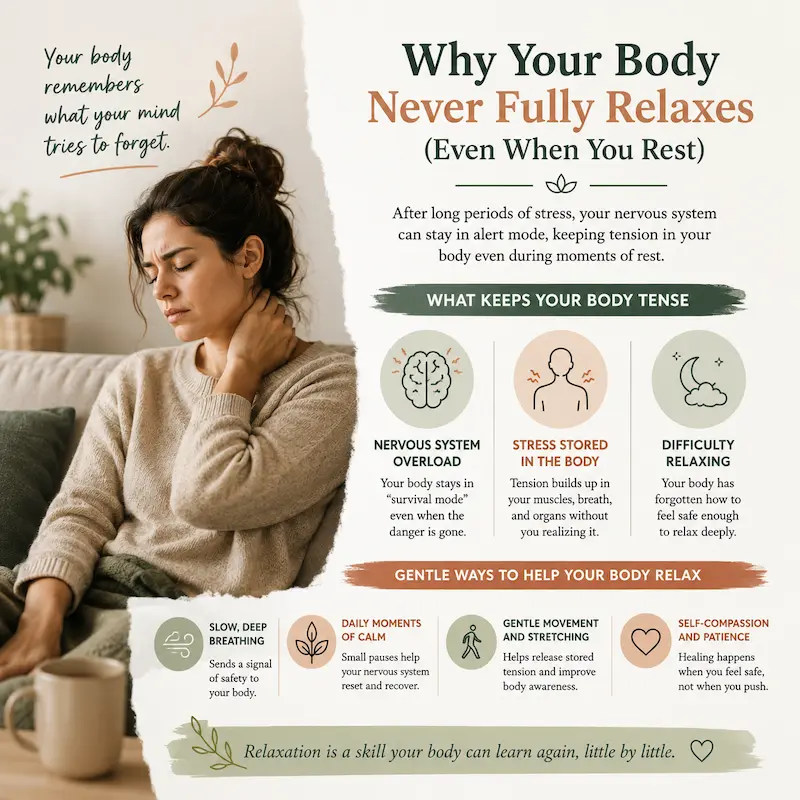
When the body remains stuck in stress mode for long periods, tension can slowly accumulate in both the body and the nervous system.
How Stress Stored in the Body Prevents the Body from Fully Relaxing
Stress stored in the body may affect breathing, posture, digestion, sleep, and emotional balance. Over time, the body can become so used to tension that relaxation itself starts to feel unfamiliar.
This is one reason why some people struggle to feel calm even when they try to slow down.
If you want to understand this process more deeply, you can also explore how stress accumulates in the body and why tension can remain stored over time.
Why the Body Never Fully Relaxes When the Nervous System Feels Unsafe
The nervous system constantly looks for signs of safety or danger. After long periods of pressure, worry, or emotional stress, the body may begin to interpret even normal situations as stressful.
As a result, the body stays tense and alert instead of entering a relaxed state naturally.
Gentle Ways to Help Your Body Feel Safe Again
The goal is not to force the body to relax immediately. Instead, it is often more helpful to create small moments of safety and calm that slowly teach the nervous system that it no longer needs to stay on high alert.
Gentle Breathing and Body Awareness
Slow breathing, gentle movement, stretching, or simply noticing physical sensations can help reduce body tension and stress over time.
Body awareness helps reconnect the mind and body in a calmer and more compassionate way.
You may also find helpful these gentle ways to relax your body from stress naturally and reduce physical tension little by little.
Small Daily Habits That Calm the Nervous System
Simple daily practices can support long-term relaxation:
- slowing down for a few minutes,
- walking calmly,
- spending time in silence,
- reducing overstimulation,
- or creating healthier routines.
Over time, these small actions can help the body leave survival mode little by little.
For additional support, you can also explore simple ways to relax your nervous system naturally and help your body feel calmer again.
Sometimes the solution is not a major change but a collection of simple habits for stress relief practiced consistently.
A Gentle Way to Start Relaxing Again
Persistent physical tension is often one of the reasons the body struggles to fully relax, even during periods of rest.
If your body never fully relaxes, it does not mean that something is wrong with you. In many cases, it simply means that your nervous system has been under stress for too long.
If you’d like to understand why relaxation may still feel difficult even after stressful situations have ended, you may find our guide on why relaxation is difficult after stress helpful.
Learning to relax again is often a gradual process. Small moments of calm, safety, and body awareness can slowly help the nervous system feel more balanced again.
If you want to continue exploring gentle ways to reduce stress naturally, you can also read our guides about stress stored in the body, nervous system relaxation, and body awareness.
If this experience feels familiar, you may also enjoy Stress and Muscle Tension: Why Your Body Stays Tight (and How to Release It), which explores why chronic stress can keep the body in a protective state and how gentle habits may help.