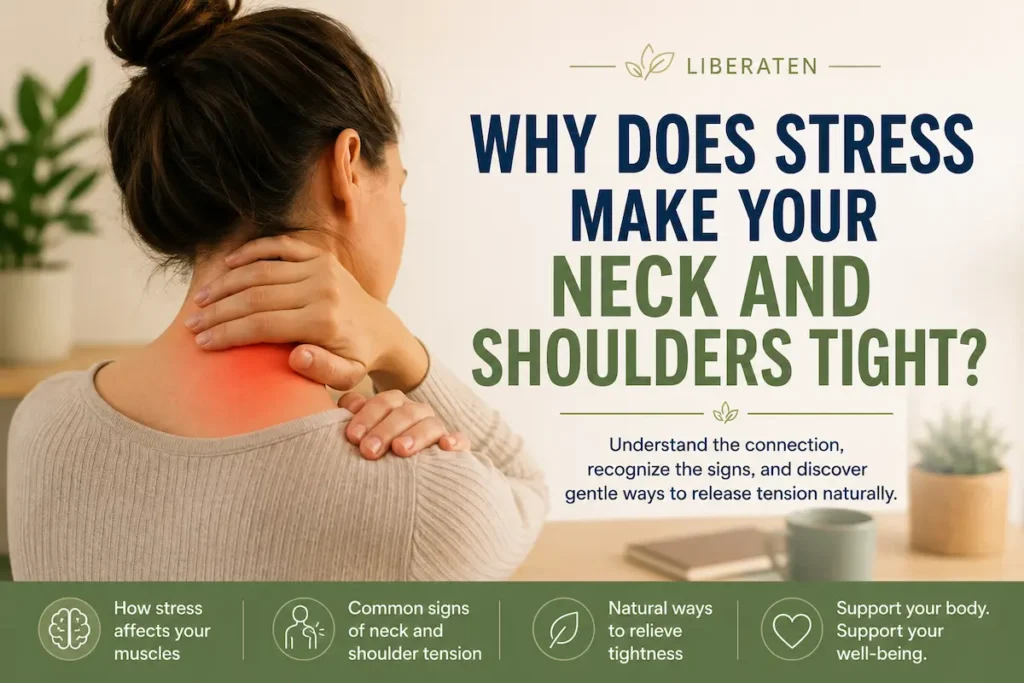
Neck and shoulders tight is a common experience, especially during periods of ongoing stress. You might wake up feeling stiff, notice your shoulders creeping toward your ears during the day, or struggle to relax even after work is over.
This kind of tension is not always caused by exercise or poor posture. Stress can also influence how your muscles respond, keeping them slightly contracted for longer than necessary. Over time, this can make your neck and shoulders feel sore, heavy, or difficult to move.
Understanding why this happens is the first step toward helping your body relax again. In this article, you’ll discover why stress often affects these muscles and explore gentle, natural ways to reduce tension and support your overall well-being.
Why Stress Often Makes Your Neck and Shoulders Tight
When your brain senses stress, it prepares your body to respond. This automatic reaction, often called the fight-or-flight response, increases muscle tension so you’re ready to react quickly if needed.
The American Psychological Association also explains that stress can trigger physical reactions, including muscle tension, as part of the body’s natural response to challenging situations.
The muscles around your neck and shoulders are particularly sensitive to this response. They help protect your head and upper body, so they often tighten first when your nervous system feels under pressure.
If you’d like to understand the connection in more detail, you may also enjoy reading our article on Why Does Stress Cause Physical Tension?
If stressful situations happen frequently, these muscles may stay slightly contracted even after the original trigger has passed. That’s why many people notice neck and shoulders tight long after a busy day or emotionally demanding event.
Your Body Is Trying to Protect You
Muscle tension is not your body’s enemy. It’s actually a protective mechanism designed to keep you safe.
The problem appears when stress becomes frequent or long-lasting. Instead of relaxing completely, your muscles may remain partially activated, creating stiffness and discomfort that feels difficult to release.
Common Signs of Neck and Shoulders Tight Caused by Stress
Stress affects everyone differently, but some symptoms appear very often.
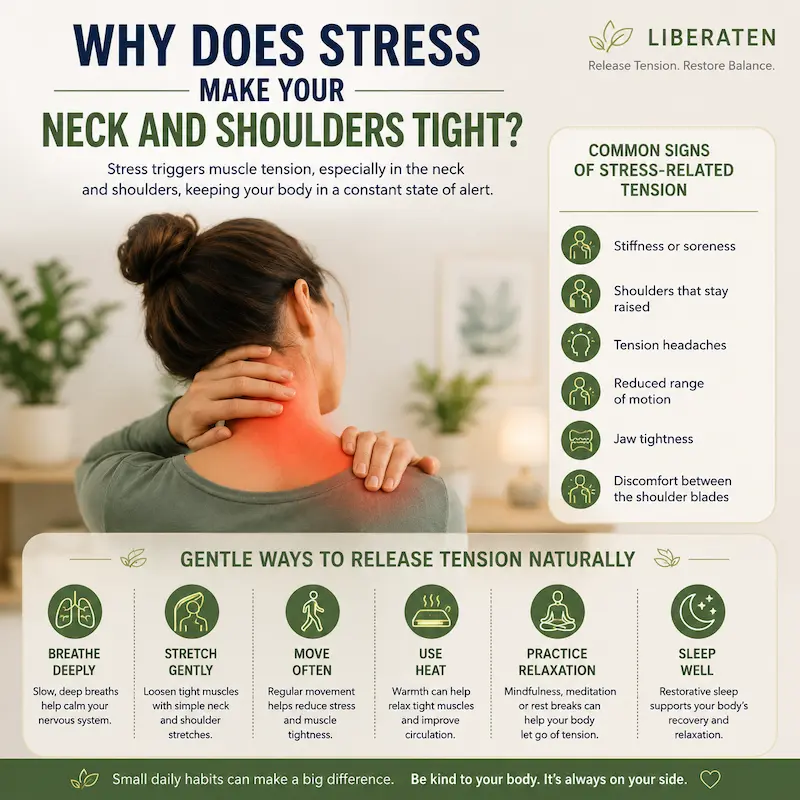
You may notice:
- tight neck and shoulders
- aching muscles
- limited movement
- shoulders that stay raised without noticing
- tension headaches
- discomfort between the shoulder blades
- jaw tightness alongside neck tension
These signs don’t always mean something serious is wrong. Often, they simply reflect how your body is responding to ongoing physical or emotional stress.
Why the Tension Feels Worse at the End of the Day
Many people feel more stiffness during the evening because muscle tension gradually builds throughout the day.
Hours spent concentrating, working at a computer, driving, or worrying can all contribute to keeping your upper-body muscles active for longer than they need to be.
Why Your Muscles Stay Tight Even After Stress Has Passed
One of the most frustrating experiences is feeling tense even when life seems calm again.
If this sounds familiar, our guide on Why Do I Have Constant Muscle Tension? explains why muscles can remain tense long after stressful situations have ended.
This happens because your nervous system doesn’t always switch off immediately. After repeated stress, your body may need time to recognise that it is safe to relax.
As a result, neck and shoulders tight may continue for days or even weeks while your body slowly returns to a more balanced state.
Daily Habits That Keep Your Neck and Shoulders Tight
Without realising it, many people develop habits that keep tension in place.
For example, you might:
- clench your jaw
- lift your shoulders while working
- breathe very shallowly
- sit without moving for long periods
These everyday patterns can make stress-related muscle tension last longer than necessary.
Gentle Ways to Relieve Neck and Shoulders Tight Naturally
Fortunately, small daily habits can make a meaningful difference over time.
You don’t need intense workouts or complicated routines. Instead, focus on gentle, consistent actions that help your body feel safe and relaxed.
These may include:
- slow, deep breathing
- gentle neck and shoulder stretches
- short walking breaks
- improving posture without forcing it
- applying gentle warmth
- practising mindfulness or relaxation
- getting enough restorative sleep
You’ll find even more simple techniques in our article How to Release Physical Tension Naturally.
Rather than trying to force your muscles to relax, aim to create conditions that allow relaxation to happen naturally.
If stress is affecting other areas of your body too, you may also find How to Relax Your Body from Stress helpful.
Consistency Matters More Than Intensity
Many people expect instant results, but your body often responds better to regular, gentle care.
Even a few minutes each day of stretching, breathing, or mindful movement can gradually reduce muscle tightness and improve comfort over time.
When Should You Seek Medical Advice?
Although stress is a common cause of muscle tension, persistent pain should not be ignored.
Consider speaking with a healthcare professional if your symptoms:
- become severe
- follow an injury
- include numbness or weakness
- continue for a long time without improvement
- interfere with your normal daily activities
A proper assessment can help identify whether another condition may also be contributing to your symptoms.
Final Thoughts
Feeling neck and shoulders tight can be frustrating, especially when you don’t know why it keeps happening. In many cases, your muscles are responding to stress rather than injury, and understanding this connection can help you approach recovery with greater confidence.
For a broader look at how stress affects the whole body, read Stress and Muscle Tension: Why Your Body Stays Tight (and How to Release It).
Small, gentle habits practised consistently can gradually reduce muscle tension and support a calmer nervous system. Progress may take time, but every step that helps your body feel safer and more relaxed is a step toward lasting well-being.