Constant muscle tension is a common experience for many people living with chronic stress, even when they don’t realize how much pressure their body is carrying. If your muscles always feel tight, sore, or unable to fully relax, your nervous system may be trying to tell you something important.
If you often experience persistent tension throughout your body, you may also relate to our article on why people feel tense all the time, which explores how chronic stress can affect physical well-being.
Many people assume that muscle tension only happens after physical exercise or injury. However, emotional stress, anxiety, and long periods of mental pressure can also create a state of constant muscle tension that affects daily life.
In this article, we’ll explore why constant muscle tension happens, how stress affects the body, and some gentle ways to begin releasing accumulated tension naturally.
What Is Constant Muscle Tension?
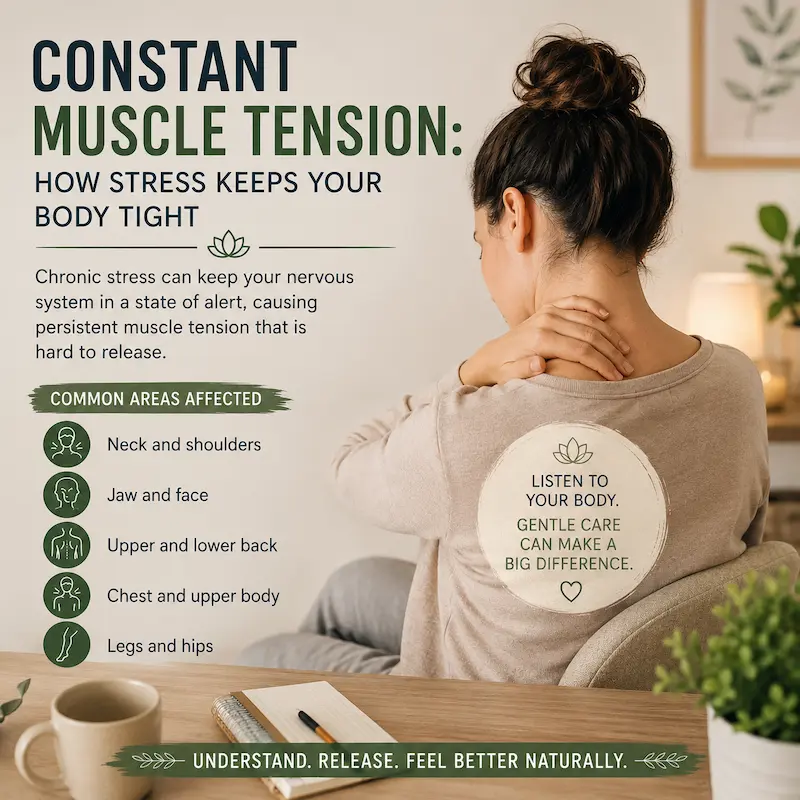
Constant muscle tension refers to a persistent state of muscle tightness that doesn’t fully disappear, even during rest. It can affect different areas of the body, including the neck, shoulders, jaw, back, chest, and legs.
Why Constant Muscle Tension Can Persist
Our bodies are designed to respond to stress through a process often called the “fight-or-flight” response. During stressful situations, muscles tighten to prepare us for action. Normally, this tension disappears once the stressful situation has passed.
However, when stress becomes chronic, the body may remain in a prolonged state of alertness, creating constant muscle tension that feels difficult to release.
Many people experience constant muscle tension mainly in their neck and shoulders. Our article Why Does Stress Make Your Neck and Shoulders Tight? explains why these muscles are especially sensitive to stress and how to support recovery naturally.
Why Does Stress Cause Constant Muscle Tension?
Stress activates the nervous system and prepares the body to respond to potential danger. This response is helpful in short periods but can become exhausting when maintained over time.
We explore this connection in more detail in our article about why stress causes physical tension and how the body responds to prolonged stress.
How the Nervous System Creates Constant Muscle Tension
When the nervous system remains in a state of heightened alertness, muscles continue receiving signals to stay prepared. As a result, people may experience muscle tension from stress even when they are resting or trying to relax.
This is why some individuals feel physically tense despite having no obvious injury or illness.
If this sounds familiar, you may also want to learn how to relax your nervous system naturally using gentle and supportive practices.
Emotional Stress Can Become Physical
Emotional experiences such as anxiety, uncertainty, pressure, grief, or emotional overload can all contribute to constant muscle tension. The body often expresses emotions that the mind has difficulty processing.
You may also find Stress and Muscle Tension: Why Your Body Stays Tight (and How to Release It) helpful, as it explains how chronic stress influences muscle tension and why recovery often takes time.
Common Signs of Constant Muscle Tension
Constant muscle tension can appear in many different ways and may vary from person to person.
Physical Symptoms You May Notice
Some common signs include:
- Tight shoulders and neck pain
- Jaw clenching or teeth grinding
- Back stiffness
- Muscle soreness without physical exertion
- Headaches or tension headaches
- Difficulty relaxing the body
- Fatigue and low energy
- A constant feeling of physical discomfort
Many of these symptoms overlap with the physical signs of stress in the body, which can sometimes go unnoticed for long periods.
Many people experiencing chronic muscle tension describe feeling as though their body never fully switches off.
If you feel physically exhausted but still find it difficult to relax, you may also relate to Wired but Tired: Why You Feel Exhausted but Can’t Relax
How Constant Muscle Tension Affects Daily Life
Living with constant muscle tension can affect both physical and emotional well-being.
According to the World Health Organization (WHO), prolonged stress can have significant effects on both physical and mental health.
The Cycle of Stress and Tension
When muscles remain tense for long periods, discomfort increases. This discomfort can create additional worry and frustration, which in turn increases stress levels and reinforces the cycle of tension.
Over time, this cycle may affect sleep quality, concentration, mood, energy levels, and overall quality of life.
How to Reduce Constant Muscle Tension Naturally
Although there is no instant solution, small daily habits can help the body gradually feel safer and more relaxed.
Practical Techniques That May Help
Some gentle approaches include:
- Slow and conscious breathing exercises
- Gentle stretching
- Walking in nature
- Progressive muscle relaxation
- Mindfulness practices
- Improving sleep habits
- Reducing unnecessary stressors
- Listening to the body’s signals with compassion
Developing small, consistent habits can also help reduce tension over time. You may find our guide to micro habits for stress relief helpful.
The goal is not to force the body to relax, but to create conditions that allow relaxation to happen naturally.
When Should You Seek Professional Help?
While constant muscle tension is often related to stress, persistent or severe symptoms should always be evaluated by a healthcare professional.
Listening to Your Body Matters
If muscle tension significantly affects your daily life, sleep, work, or emotional well-being, seeking professional guidance can be an important step toward recovery and long-term health.
Final Thoughts: Listening to Your Body with Compassion
Constant muscle tension is not a sign of weakness or failure. Often, it is the body’s way of adapting to prolonged stress and trying to protect you.
Learning to understand your body’s signals with patience and compassion can become the first step toward releasing tension, supporting your nervous system, and gradually feeling more at ease again.
Understanding why muscles stay tight is only the first step. Our article on how to release physical tension naturally explores simple daily habits that may help reduce ongoing muscle tension.