
Feeling wired but tired can be confusing. Your body may feel heavy, drained, or ready to rest, while something inside you still seems switched on. You may sit down at the end of the day and realize that, although you are exhausted, your shoulders remain tense, your thoughts keep moving, or you simply cannot settle into a deeper sense of calm.
This experience can happen when stress and tiredness overlap. After spending hours or days responding to pressure, your body does not always move immediately from activation into relaxation. You may need rest, but your system may still be responding as though it needs to stay alert.
Understanding this pattern can help you respond more gently. Instead of trying to force yourself to relax, you can begin by noticing what your body is doing and giving it time to shift gradually toward rest.
What Does Wired but Tired Mean?
Being wired but tired describes the uncomfortable experience of feeling physically or mentally exhausted while still finding it difficult to slow down. You know you need a break, yet your body or mind seems reluctant to switch off.
When Your Body Is Tired but Still Feels Alert
You might notice that your muscles remain tight even when you lie down, or that your breathing stays shallow after the stressful part of the day has ended. Some people feel restless, irritable, or unusually sensitive to noise and stimulation. Others simply describe the sensation as being unable to fully let go.
This does not necessarily mean that something is wrong with your ability to relax. Stress involves changes throughout the body that help you respond to challenges. Once the challenge has passed, those changes do not always disappear instantly.
If stress has been frequent or prolonged, the contrast can become especially noticeable: you feel exhausted, but your body still behaves as though it needs to remain ready for what comes next.
Why Rest Does Not Always Feel Restful
Resting physically and feeling deeply relaxed are not always the same thing. You can stop working, sit on the sofa, or go to bed while still carrying some of the activation built up during the day.
That is one reason the wired but tired feeling can persist even when you are deliberately trying to rest. Your body may need a gradual transition rather than an abrupt command to relax.
Simple signals of safety and reduced stimulation can help support that transition. Slowing your breathing, releasing unnecessary muscle tension, reducing screen or work stimulation, or spending a few quiet minutes without demanding anything from yourself can give your system an opportunity to settle.
Why Stress Can Leave You Wired but Tired
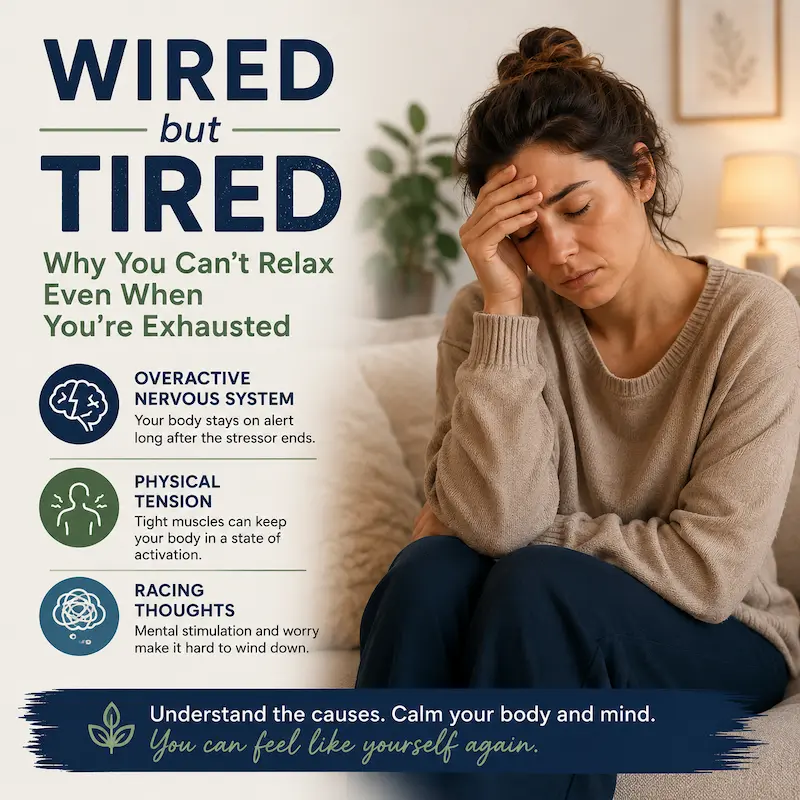
Stress is designed to help you respond when something requires attention or action. Your nervous system can increase alertness, redirect energy, change your breathing, and prepare your muscles to respond. These reactions can be useful in the short term.
The difficulty comes when periods of activation happen repeatedly without enough opportunity for recovery. You may become increasingly tired while your body continues receiving signals that encourage alertness.
This can create the wired but tired experience: your energy feels depleted, but your system has not completely shifted into a calmer state.
Why Your Nervous System May Stay Alert When You’re Wired but Tired
Your nervous system does not always move from stress to relaxation like an on-and-off switch. When a stressful situation ends, your body may need some time to recognize that the immediate demand has passed.
During that transition, you might still notice physical tension, faster or shallower breathing, restlessness, or a feeling that you need to keep doing something. Your mind may also continue reviewing problems, conversations, unfinished tasks, or what needs to happen tomorrow.
If this pattern repeats frequently, slowing down can begin to feel surprisingly difficult—even when you are genuinely exhausted.
Physical Tension Can Keep the Body Feeling Activated
Stress does not only affect thoughts and emotions. It can also influence how you hold your body.
You may unconsciously tighten your jaw, raise your shoulders, brace your abdomen, or keep muscles partially contracted for long periods. Over time, this can contribute to the feeling that your body is still “working” even when you are trying to rest.
Persistent muscle tension can also make tiredness feel more uncomfortable. Instead of experiencing a pleasant sense of relaxation after a demanding day, you may feel drained and physically tight at the same time.
Mental Stimulation Can Continue After the Stressor Ends
Sometimes the external source of stress has already disappeared, but the mind continues processing it.
You may replay what happened, anticipate future problems, check messages, move between tasks, or continue consuming stimulating information. None of these behaviors necessarily feels dramatic, yet together they can make it harder to transition from activity into rest.
This is another reason you can feel wired but tired without experiencing an obvious crisis. Your body may be asking for recovery while signals around you continue to keep your attention active.
Exhaustion Does Not Automatically Create Relaxation
It is easy to assume that becoming tired enough will eventually force the body to relax. But exhaustion and relaxation are not identical states.
Feeling exhausted tells you that your resources may need replenishing. Feeling relaxed involves a reduction in physical and mental activation. The two can occur together, but they do not always do so automatically.
Recognizing this difference is useful because it changes the goal. Instead of waiting until you are completely exhausted, you can begin creating small opportunities for recovery throughout the day and help your body move toward a calmer state before fatigue becomes overwhelming. If prolonged stress has been part of your life for some time, understanding how to recover from chronic stress can also help you approach that recovery more gradually.
Common Wired but Tired Signs to Look For
The wired but tired feeling does not look exactly the same for everyone. For some people, mental restlessness is the most noticeable sign. For others, the experience is mainly physical.
You may also notice that the feeling changes throughout the day. You might struggle with low energy for hours and then suddenly feel more alert when you finally have an opportunity to rest.
Your Body Feels Exhausted but Cannot Fully Let Go
One common sign is a strange combination of heaviness and tension. You want to lie down or stop what you are doing, but your body does not feel comfortably relaxed.
Your shoulders may remain raised, your jaw may stay tight, or you may notice tension in your neck, back, hands, or abdomen. Even while sitting still, part of your body may seem to remain prepared for action.
This physical tension can make rest feel less restorative than you expected.
Why You Feel Restless When You’re Wired but Tired
A busy day can sometimes hide how activated you feel. As long as you are moving between tasks, the sensation may not be obvious.
Then you stop.
Instead of immediately feeling relieved, you may become restless. You might reach for your phone, get up to do another task, check something you have already checked, or feel uncomfortable simply sitting quietly.
This does not mean you are incapable of relaxing. Your body may simply need a more gradual transition from activity to rest.
Your Mind Keeps Looking for the Next Problem
Physical exhaustion does not always quiet mental activity.
You may find yourself planning tomorrow, replaying conversations, thinking about unfinished work, or imagining possible problems. Even relatively ordinary thoughts can keep your attention oriented toward what needs to happen next rather than toward what is happening now.
When this becomes habitual, genuine downtime can start to feel unfamiliar.
Small Things Feel More Overwhelming Than Usual
When you are both tired and activated, your capacity to deal with additional demands may feel reduced.
A notification, an unexpected request, background noise, or a small change of plans may suddenly seem much more irritating or difficult than it normally would.
This can be a useful signal that your system needs recovery rather than more stimulation.
Why Rest May Not Feel Restorative When You’re Wired but Tired
Another sign is that taking a break does not seem to change much.
You may spend time on the sofa, watch something, scroll through your phone, or simply stop working, yet still feel depleted afterward. Sometimes this happens because stopping an activity is not necessarily the same as giving your body and mind conditions that support recovery.
Recognizing this distinction can help you choose forms of rest that reduce stimulation rather than simply filling the pause with another activity.
How to Gently Help Your Body Slow Down
If you feel wired but tired, trying harder to relax can sometimes create additional pressure. A gentler approach is to give your body small, repeated signals that the period of intense activity is ending.
You do not need to perform every technique or create a complicated relaxation routine. One simple change may be enough to begin shifting the pace.
Create a Transition Between Activity and Rest
Moving directly from work, responsibilities, or constant stimulation into complete stillness can feel abrupt.
Try creating a short transition instead. Walk slowly for a few minutes, prepare a warm non-caffeinated drink, change into comfortable clothes, dim the lights, or sit somewhere quiet before beginning your evening activities.
The specific ritual matters less than the message it creates: you are no longer required to keep operating at the same pace.
Release Tension Without Forcing Your Muscles
Rather than commanding yourself to “relax,” notice where you are holding unnecessary tension.
Let your shoulders drop slightly. Unclench your jaw. Soften your hands. Allow your abdomen to move naturally as you breathe.
You do not need to eliminate every trace of tension. Even a small reduction can help your body move away from constant bracing.
Reduce Stimulation for a Few Minutes
When your system already feels overloaded, adding more information may keep it activated.
Consider taking a short break from notifications, social media, news, work messages, or rapidly changing entertainment. You do not have to disconnect for the entire evening. Even five or ten quieter minutes can create a noticeable contrast.
During that time, allow yourself to do something deliberately simple: look outside, listen to calm music, stretch gently, or simply sit without needing to accomplish anything.
Let Your Breathing Become Slower Naturally
Your breathing often changes with stress, sometimes becoming faster or shallower without you noticing.
Instead of forcing a particular breathing pattern, begin by observing your breath. Then allow your exhalation to become slightly slower and easier if that feels comfortable.
A few calm breaths can become part of the transition from doing to resting. There is no need to turn breathing into another task you must perform perfectly.
Give Recovery More Than One Opportunity
Recovery does not have to happen only at the end of the day.
Small pauses throughout the day can prevent stress and stimulation from accumulating continuously. A quiet minute between tasks, a short walk, a meal without screens, or a few moments of slower breathing can all create small recovery points.
Over time, these pauses may make the transition into evening rest feel less dramatic because your body has not been asked to remain continuously activated for hours.
When Feeling Wired but Tired Deserves More Attention
Occasionally feeling wired but tired after a demanding day or stressful period can happen. However, persistent exhaustion or difficulty relaxing should not automatically be attributed to stress.
Fatigue can have many possible causes, and ongoing symptoms deserve attention—especially when they begin interfering with your daily life, concentration, mood, work, or ability to rest.
Pay Attention to Patterns That Continue
Notice how often you experience this combination of exhaustion and activation.
Does it happen mainly after particularly demanding days? Does it improve when you have enough time to recover? Or has it become something you experience almost every day?
Keeping the pattern in mind can help you distinguish between temporary stress and a problem that may need further attention.
Consider Other Factors That May Be Contributing
Stress is only one possible influence.
Your daily schedule, sleep habits, caffeine intake, physical activity, workload, screen use, and opportunities for genuine downtime can all affect how alert or exhausted you feel.
Rather than searching for a single explanation, consider the overall pattern of your days and whether anything consistently makes the feeling better or worse.
Know When to Seek Professional Guidance
If exhaustion persists despite adequate rest, becomes severe, appears without a clear explanation, or is accompanied by other concerning symptoms, consider speaking with a qualified healthcare professional.
This is particularly important because persistent fatigue can have causes unrelated to stress. A healthcare professional can consider your individual circumstances and determine whether further evaluation is appropriate.
Seeking guidance does not mean that something serious is necessarily wrong. It simply prevents you from assuming that every symptom is caused by stress when another explanation may need to be considered.
Moving from Wired and Tired Toward Genuine Rest
Feeling wired but tired can seem contradictory, but exhaustion and relaxation are not the same thing. You can desperately need rest while your body and mind are still carrying some of the activation created by a demanding day or a prolonged period of stress.
The goal is not to force yourself into instant calm.
Instead, give your body opportunities to slow down gradually. Reduce unnecessary stimulation, notice where you are holding tension, create transitions between activity and rest, and allow small recovery periods to become part of your day.
Some days, the shift may happen quickly. On others, your body may need more time.
What matters is learning to recognize the signals earlier. When you notice that you are exhausted but still unable to settle, you can respond with less pressure and more patience.
Being tired tells you that you need recovery. Feeling wired tells you that slowing down may need to be part of that recovery too.