Stress and muscle tension often go hand in hand, yet many people don’t realize how closely the mind and body are connected. When stress becomes part of daily life, your muscles may stay tight long after the stressful situation has passed.
You might notice stiffness in your neck, shoulders, jaw, or back without understanding why. This physical tension isn’t a sign that your body is failing—it’s often a natural response to a nervous system that has remained on alert for too long.
The good news is that your body is designed to recover. By understanding why stress and muscle tension occur together, you can begin to release physical tension gently and help your nervous system return to a calmer, more balanced state.
What Is the Connection Between Stress and Muscle Tension?
Stress is more than an emotional experience. It also creates physical changes throughout your body. When your brain detects a challenge or potential danger, your nervous system prepares you to react quickly. One of the first responses is an increase in muscle tension.
What Is Physical Tension?
Physical tension is the feeling of tightness or stiffness that occurs when muscles remain partially contracted instead of fully relaxing. It may affect one area, such as the neck or shoulders, or create a sense of tension throughout the body.
Stress can contribute to this muscle tightness by keeping the nervous system alert and the muscles prepared for action. Over time, this may make a tense body feel normal, even when you are resting.
This reaction can be helpful in the short term because it prepares your body for movement and protection. However, when stress becomes chronic, your muscles may remain partially contracted even when there is no immediate threat.
If you’d like to understand this process in more detail, read Why Does Stress Cause Physical Tension?
Over time, this constant tension can lead to discomfort, stiffness, fatigue, and reduced mobility.
Why Stress and Muscle Tension Can Last Longer Than Expected
Your muscles don’t always relax automatically after stress has passed.
If your nervous system continues to perceive pressure, uncertainty, or emotional overload, it may remain in a protective mode. As a result, your body keeps holding tension as if it still needs to stay ready.
This is why many people experience chronic muscle tension without any injury or obvious physical cause.
If your discomfort is mainly in your upper body, you may also like our article Why Does Stress Make Your Neck and Shoulders Tight? It explains why these muscles often tighten during stress and how gentle daily habits may help them relax naturally.
Common Signs of Stress and Muscle Tension
Stress-related muscle tension can affect different parts of the body and may feel different from one person to another. Body tension symptoms can include tightness, stiffness, or discomfort, especially when stress keeps your muscles tense for long periods.
Common signs include:
- Tight shoulders
- Neck stiffness
- Jaw clenching
- Back discomfort
- Headaches caused by muscle tension
- Muscle fatigue
- Feeling tense even while resting
Many of these symptoms overlap with the physical signs of stress, making it easier to recognise when your body has been under prolonged pressure.
These symptoms often develop gradually, making them easy to ignore until they become part of everyday life.
Why Stress and Muscle Tension Can Continue After Stress Ends
Even after a stressful period ends, your nervous system may need time to feel safe again.
Recovery is not simply about “thinking positively” or forcing yourself to relax. Your body often requires repeated experiences of safety, rest, and gentle movement before muscle tension begins to decrease naturally.
How Stress and Muscle Tension Affect Your Body
When stress continues for weeks or months, your body spends more time in a state of heightened alertness.
This ongoing activation can influence:
- Muscle tone
- Breathing patterns
- Sleep quality
- Energy levels
- Digestion
- Emotional wellbeing
The longer this pattern continues, the more normal constant tension can begin to feel.
If prolonged stress leaves you feeling exhausted while your body still struggles to switch off, you may also find Wired but Tired: Why You Feel Exhausted but Can’t Relax helpful.
The World Health Organization (WHO) also recognises that prolonged stress can affect both physical and mental health, highlighting the importance of healthy coping strategies.
How the Nervous System Influences Stress and Muscle Tension
Your nervous system constantly decides whether your environment feels safe or threatening.
When it senses safety, muscles soften, breathing becomes easier, and your body begins to recover.
When it senses danger—even psychological stress—it may continue sending signals that keep muscles prepared for action.
Understanding this process helps explain why stress and muscle tension are so closely connected.
If you’d like practical strategies, explore How to Relax Your Nervous System Naturally.
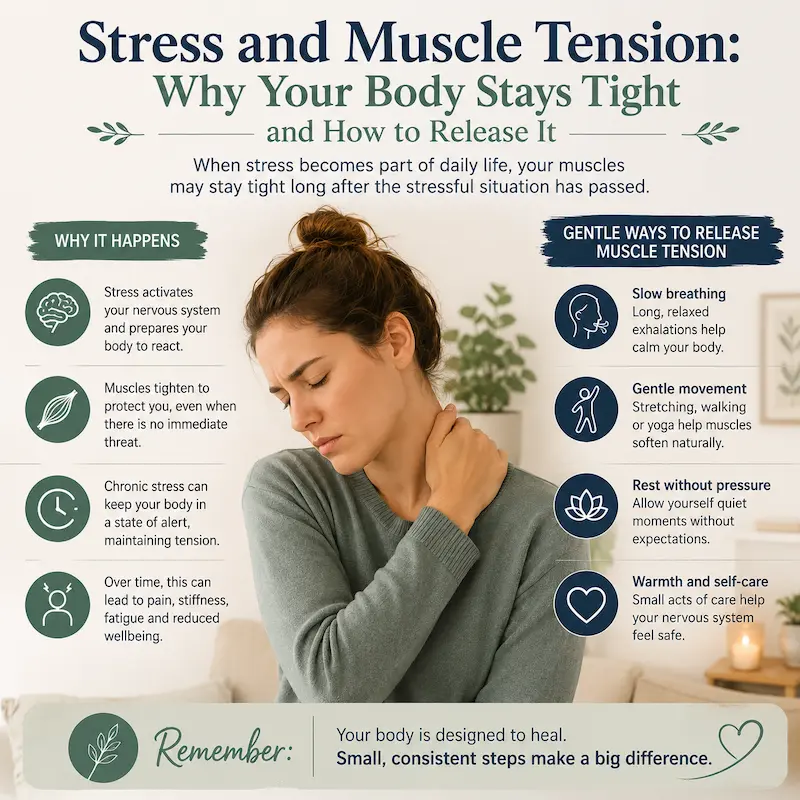
Gentle Ways to Release Stress and Muscle Tension Naturally
Fortunately, your body also has natural mechanisms for recovery.
You can also explore additional techniques in How to Release Physical Tension Naturally.
Instead of trying to force relaxation, gentle daily habits often work better over time.
Slow Breathing
Slow, relaxed breathing helps signal safety to your nervous system.
Longer exhalations are especially helpful because they encourage your body to shift away from constant alertness.
Gentle Movement
Walking, stretching, yoga, or slow mobility exercises can gradually reduce physical tension without overwhelming the body.
The goal is not intense exercise but comfortable movement that encourages muscles to let go.
Rest Without Pressure
Sometimes people become frustrated because they “can’t relax.”
Instead of trying to make relaxation happen, allow yourself quiet moments without expectations. Your nervous system often responds better to patience than pressure.
Warmth and Self-Care
Warm showers, gentle massage, comfortable clothing, and restful environments can help muscles feel safe enough to soften naturally.
Small acts of self-care repeated consistently often have a greater impact than occasional intense efforts.
When Stress and Muscle Tension Need Professional Evaluation
Although stress and muscle tension are common, persistent pain or severe symptoms should always be evaluated by a qualified healthcare professional.
If muscle tension significantly affects your daily activities or is accompanied by other concerning symptoms, professional assessment is important to rule out other medical conditions.
Natural self-care strategies can complement professional care, but they should not replace medical advice when needed.
Final Thoughts
Stress and muscle tension are closely connected because your body is designed to protect you. When stress lasts longer than expected, muscles may continue holding tension even after the original challenge has disappeared.
Rather than fighting your body, try listening to what it is communicating. Gentle movement, supportive daily habits, and patience can gradually help your nervous system feel safe again.
If you’re looking for more practical techniques, you may also find How to Relax Your Body from Stress helpful.
With time and consistency, many people discover that physical tension begins to ease—not because they forced it away, but because their body finally had the opportunity to recover naturally.