Physical tension is one of the most common ways stress affects the body. Many people notice tight shoulders, a stiff neck, jaw discomfort, or a general feeling that their body cannot fully relax. These sensations often appear gradually and can become so familiar that they seem normal.
Stress is not only an emotional experience. It also creates physical changes throughout the body. When stress continues for days, weeks, or months, muscles may remain partially contracted, making it difficult to feel comfortable and relaxed.
Understanding why stress causes physical tension can help you recognize the signs earlier and take gentle steps to release tension before it becomes a long-term problem.
What Is Physical Tension?
Physical tension refers to a state in which muscles remain tight or contracted for longer than necessary. While muscle tension is a normal response to short-term challenges, ongoing stress can keep the body in a state of readiness even when no immediate danger exists.
The Physical Tension Meaning
The physical tension meaning is closely connected to the body’s natural stress response. When the brain perceives a threat, it prepares the body for action. Muscles tighten to protect and support movement, allowing you to react quickly if needed.
In modern life, however, many stressors are psychological rather than physical. Deadlines, financial worries, relationship difficulties, and constant stimulation can trigger the same stress response repeatedly. As a result, muscles may stay tense long after the stressful situation has passed.
Why Tension Can Become Chronic
When stress becomes chronic, the nervous system may remain in a heightened state of alertness. This ongoing activation can make it difficult for muscles to fully relax, creating a cycle of discomfort and stiffness.
Over time, people may begin to experience body tension symptoms without realizing that stress is contributing to the problem.
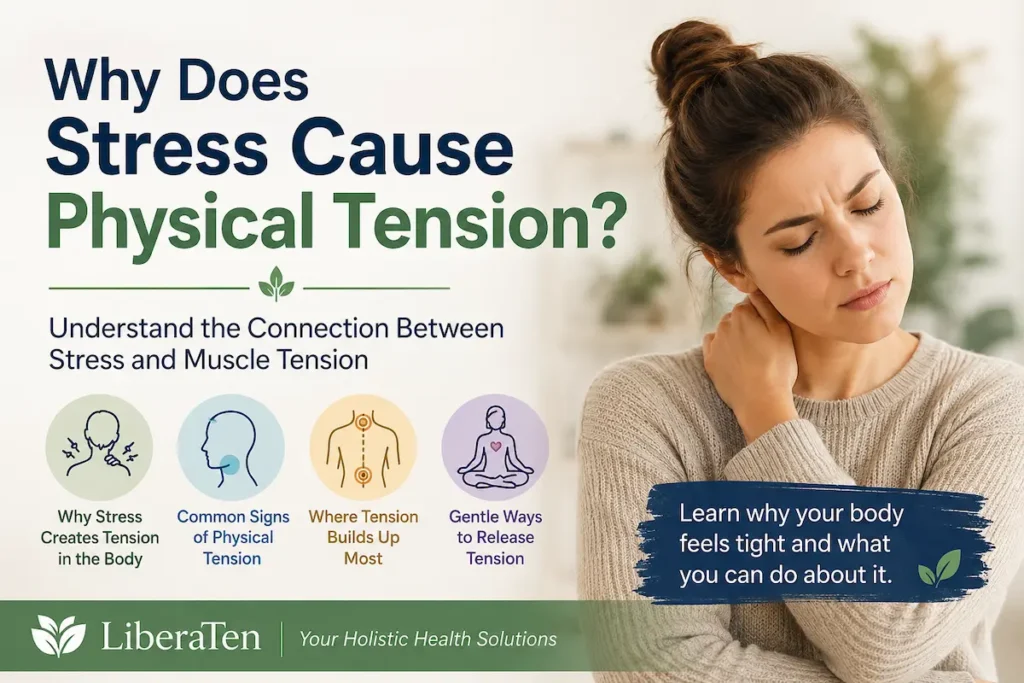
Why Does Stress Cause Physical Tension?
Stress and muscle tension are closely connected. The body’s stress response is designed to protect you, but it can also create discomfort when activated too often.
According to the American Psychological Association, chronic stress can contribute to muscle tension and other physical symptoms.
The Fight-or-Flight Response
When the brain detects stress, it activates the sympathetic nervous system. This is often called the fight-or-flight response.
During this process:
- Heart rate increases.
- Breathing becomes faster.
- Stress hormones are released.
- Muscles tighten in preparation for action.
These changes can be helpful during short-term challenges. However, when stress becomes constant, the body may continue holding unnecessary tension.
One of the most common places where people notice physical tension is the neck and shoulders. Learn more in Why Does Stress Make Your Neck and Shoulders Tight? where we explore why these muscles react so strongly to stress.
The Nervous System’s Role
The nervous system constantly scans the environment for signs of safety or danger. If it perceives ongoing stress, it may keep the body prepared for action.
This can explain why some people feel tense even while resting. Their muscles are responding to signals from a nervous system that has not yet returned to a relaxed state.
Why Relaxation Can Feel Difficult
Many people become frustrated when they try to relax but still feel tightness throughout the body. This often happens because the nervous system needs time to shift from a state of alertness into a state of safety.
Physical tension is not a sign of failure. It is often a sign that the body has been working hard to protect itself.
If you would like to understand how stress builds up over time, you may find our guide on how stress accumulates in the body helpful.
However, some people continue experiencing physical tension for months or even years and may wonder why they feel this way even when there is no obvious danger. If this sounds familiar, you may find helpful our article about why you may feel tense all the time.
Common Signs of Physical Tension
The signs of physical tension can vary from person to person. Some symptoms are obvious, while others may develop gradually over time.
Physical Tension Symptoms
Common tense body symptoms include:
- Tight shoulders
- Neck stiffness
- Jaw clenching
- Back discomfort
- Headaches
- Chest tightness
- Muscle soreness
- Difficulty relaxing
These symptoms do not always indicate a medical problem. In many cases, they reflect the body’s response to ongoing stress.
Tension in Body Symptoms That Are Easy to Miss
Some signs of tension are subtle and often overlooked.
For example, you may notice:
- Frequent sighing
- Shallow breathing
- Restlessness
- Difficulty sitting comfortably
- Constant fidgeting
These small signals can reveal that the body is carrying more stress than you realize.
Where Does Physical Tension Usually Build Up?
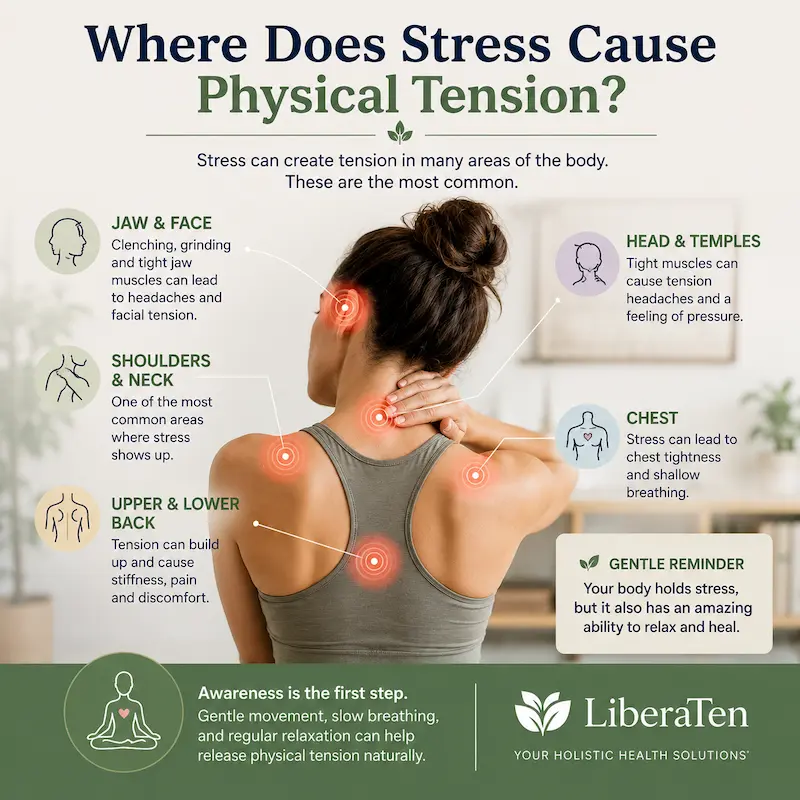
Physical tension can affect almost any part of the body, but certain areas are especially common because they are closely connected to stress and posture.
Neck and Shoulders
The neck and shoulders are among the first places where many people notice tension.
When stress levels increase, the muscles in these areas often tighten automatically. Over time, this can create stiffness, soreness, and a feeling of carrying weight on the shoulders.
People who spend long hours sitting at a desk may experience even greater discomfort because stress and poor posture can reinforce each other.
Jaw and Face
Many people clench their jaw without realizing it.
Stress can cause the muscles around the jaw, face, and temples to remain tense throughout the day or even during sleep. This may contribute to jaw discomfort, headaches, or teeth grinding.
Becoming aware of jaw tension is often an important step toward reducing overall physical tension.
Back and Chest
The upper and lower back are also common areas where tension accumulates.
Stress can lead to muscle tightness that affects movement and comfort. Some people also experience chest tightness, which can feel worrying even when it is simply related to stress and muscle tension.
Learning gentle ways to relax these areas may help the body feel safer and more comfortable.
Can Long-Term Physical Tension Affect the Body?
Yes. When stress continues for long periods, physical tension can become more noticeable and persistent.
The body is designed to handle short-term stress, but it is not meant to stay in a constant state of alertness.
The Effects of Ongoing Physical Tension
Long-term physical tension may contribute to:
- Frequent muscle stiffness
- Reduced flexibility
- Fatigue
- Sleep difficulties
- Headaches
- Increased discomfort during daily activities
These symptoms often develop gradually, making them easy to overlook at first.
The Connection Between Stress and Fatigue
Many people assume that tension and fatigue are separate problems. In reality, they are often connected.
Keeping muscles partially contracted throughout the day requires energy. Over time, this constant effort can contribute to feelings of exhaustion and make relaxation more difficult.
This is one reason why people experiencing chronic stress may feel tired even after resting.
For a deeper look at how stress can create ongoing physical discomfort, read our article about constant muscle tension and the body’s stress response.
How to Release Physical Tension Naturally
The goal is not to force the body to relax. Instead, it is often more helpful to create conditions that allow relaxation to happen naturally.
Gentle Movement
Light movement can help release accumulated tension.
Activities such as:
- Walking
- Gentle stretching
- Yoga
- Mobility exercises
can encourage muscles to soften and improve body awareness.
The key is consistency rather than intensity.
Slow and Calm Breathing
Breathing exercises can help signal safety to the nervous system.
Slow breathing encourages the body to shift away from a state of alertness and toward a more relaxed state.
Even a few minutes of calm breathing each day may help reduce physical tension over time.
Improving Body Awareness
Many people carry tension without noticing it.
Taking a few moments throughout the day to observe your posture, breathing, and muscle tightness can help you recognize where stress is affecting your body.
Awareness is often the first step toward change.
Supporting the Nervous System
Because physical tension is closely connected to the nervous system, supporting overall well-being can make a difference.
Helpful practices may include:
- Spending time in nature
- Getting enough sleep
- Reducing unnecessary stimulation
- Taking regular breaks
- Creating moments of calm throughout the day
Small actions performed consistently are often more effective than dramatic changes.
Learning how to relax your body from stress can also help reduce physical tension gradually.
Some people also benefit from techniques that help relax the nervous system naturally.
Alongside understanding the causes of tension, developing a few micro habits for stress relief can help support long-term recovery and well-being.
When Should You Seek Professional Help?
Physical tension related to stress is common, but persistent symptoms should not be ignored.
Consider speaking with a healthcare professional if:
- Pain becomes severe.
- Symptoms continue for a long period.
- Tension interferes with daily life.
- You experience symptoms that concern you.
A professional evaluation can help rule out other causes and provide appropriate guidance.
Final Thoughts
Physical tension is often the body’s way of responding to stress and protecting itself. While this response can be helpful in the short term, ongoing stress may keep muscles tight and make relaxation feel difficult.
Understanding the connection between stress, the nervous system, and muscle tension can help you recognize the signs earlier and respond with greater awareness.
If you’d like to explore this connection further, read our article Stress and Muscle Tension: Why Your Body Stays Tight (and How to Release It) to understand why muscles can remain tense long after stressful situations have passed and what gentle strategies may help.
Rather than fighting your body, try listening to what it may be telling you. Small, gentle steps toward relaxation can help reduce physical tension and support long-term well-being.
If you’re looking for practical ways to reduce muscle tightness, you may also enjoy our guide on how to release physical tension naturally, where you’ll find gentle techniques that support your body’s recovery from stress.