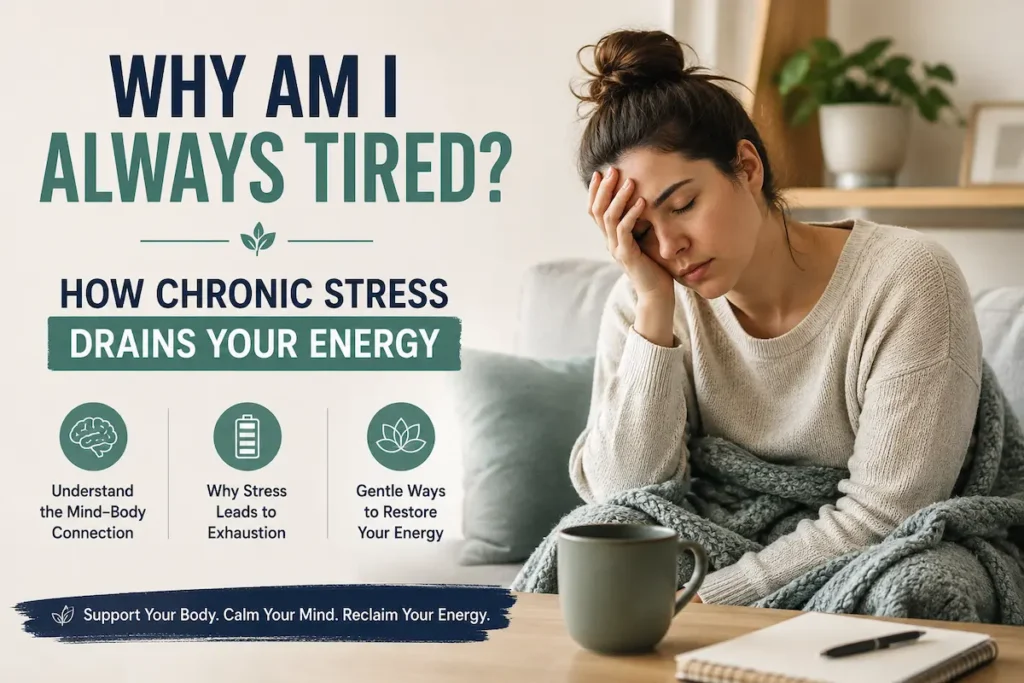
Why am I always tired? If you find yourself asking this question regularly, you are not alone. Many people experience persistent fatigue even when they sleep enough, take breaks, and try to rest. In many cases, the problem is not simply a lack of sleep but the effects of chronic stress on the body and nervous system.
When stress becomes a constant part of daily life, the body uses large amounts of energy to stay alert and prepared for potential challenges. Over time, this ongoing state of tension can leave you feeling physically exhausted, mentally drained, and emotionally depleted. Understanding the connection between chronic stress and fatigue is often the first step toward restoring your energy naturally.
Many people who feel always tired assume they simply need more sleep.
Why You May Feel Always Tired Under Chronic Stress
Stress is not always a bad thing. In short periods, it can help us respond to challenges and stay focused. However, when stress continues for weeks, months, or even years, the body pays a price.
Why Always Tired Can Be a Sign of Ongoing Stress
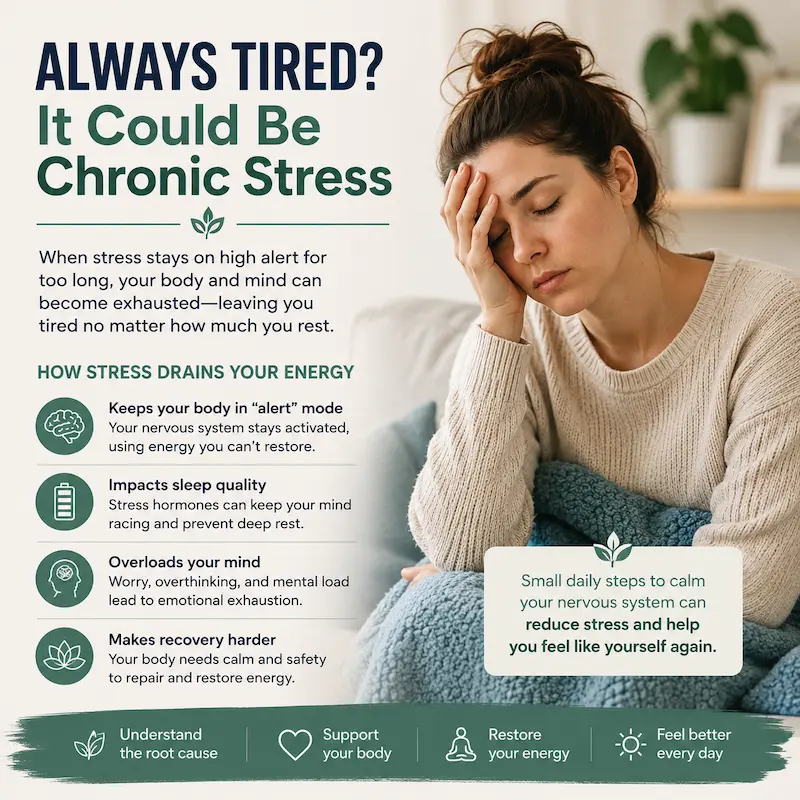
The nervous system is designed to activate during stressful situations. Hormones such as cortisol and adrenaline help prepare the body for action. While this response is useful in emergencies, it can become exhausting when activated continuously.
A body that remains on alert for long periods uses more energy than most people realize. Even if you are sitting quietly, your system may still be working hard behind the scenes.
Chronic Stress and Fatigue Often Go Together
Many people experiencing chronic stress and fatigue assume they simply need more sleep. While sleep is important, the deeper issue is often that the nervous system never fully leaves its stress response mode.
As a result, fatigue can persist even after a full night of rest.
In some cases, you may feel exhausted but still unable to fully relax, a pattern often described as feeling wired but tired.
Always Tired? Signs That Stress May Be Draining Your Energy
Fatigue caused by chronic stress often appears alongside other symptoms.
Physical Signs of Stress
You may notice:
- Muscle tension
- Frequent headaches
- Tight shoulders or neck pain
- Digestive discomfort
- Increased sensitivity to illness
These physical signs of stress indicate that the body may be carrying a significant burden.
Mental and Emotional Fatigue
Stress does not only affect the body. It can also impact the mind.
Common signs include:
- Difficulty concentrating
- Feeling overwhelmed by simple tasks
- Lack of motivation
- Irritability
- Mental exhaustion
Many people describe this experience as feeling drained before the day has even begun.
Why Your Nervous System Can Make You Feel Always Tired
The nervous system plays a central role in how energized or exhausted we feel.
People who feel always tired often have a nervous system that remains activated for long periods.
Learning how to relax your nervous system naturally can help reduce stress and support energy recovery over time.
When the Nervous System Stays in Survival Mode
The human body is designed to move between periods of activity and recovery. However, chronic stress can keep the nervous system locked in a state of heightened alertness.
Even when there is no immediate danger, the body may continue behaving as if a threat exists.
This constant activation consumes energy and makes recovery more difficult.
Why Relaxing Can Feel Difficult
Some people notice that they struggle to relax even during quiet moments. They may sit down to rest but still feel restless, tense, or mentally active.
This is often a sign that the nervous system needs time and support to return to a calmer state.
If this sounds familiar, you may also relate to the experience described in our article about why your body never fully relaxes even when you rest.
Why Rest Alone Does Not Always Restore Energy
One of the most confusing aspects of stress-related fatigue is that rest does not always solve the problem.
Sleep and Recovery Are Not the Same Thing
Sleep is essential, but true recovery involves more than simply spending hours in bed.
A person may sleep eight hours and still wake up tired if their body remains under significant stress.
Recovery requires the nervous system to experience periods of genuine safety and relaxation.
This may help explain why your body never fully relaxes, even when you have enough time to rest.
When stress has continued for a long time, learning how to recover from chronic stress can also help you understand why restoring your energy may be a gradual process.
Hidden Sources of Stress
Sometimes the causes of fatigue are not obvious.
Examples include:
- Constant worrying
- Information overload
- Financial concerns
- Relationship difficulties
- Excessive responsibilities
Even when these stressors seem manageable individually, their combined effect can gradually drain energy reserves.
Gentle Ways to Recover Energy When You Feel Always Tired
The goal is not to force the body to have more energy. Instead, it is often more helpful to reduce the factors that are consuming energy.
If you feel always tired, supporting your nervous system may be more effective than forcing yourself to work harder.
Support Your Nervous System
Simple practices can help signal safety to the body:
- Slow breathing exercises
- Gentle stretching
- Mindful walks
- Spending time in nature
- Quiet moments without screens
Small daily actions can have a meaningful cumulative effect.
Listen to Your Body
Many people ignore early signs of exhaustion until they become overwhelming.
Learning to notice physical tension, mental fatigue, and emotional strain can help prevent deeper burnout.
Your body often provides useful information long before symptoms become severe.
Reduce Unnecessary Stress
Not every source of stress can be removed, but many can be reduced.
Consider:
- Simplifying your schedule
- Creating healthy boundaries
- Prioritizing recovery time
- Reducing multitasking
These changes may seem small, but they often support long-term energy restoration.
Always Tired Despite Rest? When to Seek More Support
While chronic stress is a common cause of fatigue, it is important to remember that persistent tiredness can also have medical causes.
Seek Professional Guidance When Needed
If fatigue is severe, unexplained, or continues despite lifestyle improvements, speaking with a healthcare professional is advisable.
For additional information about stress, mental health, and ongoing fatigue, resources from the National Institute of Mental Health (NIMH) may be helpful.
Conditions such as sleep disorders, nutritional deficiencies, hormonal imbalances, and other health concerns may contribute to ongoing exhaustion.
A professional evaluation can help identify the underlying cause.
Final Thoughts: Listening to What Your Body Needs
If you are constantly asking yourself, “Why am I always tired?”, your body may be trying to communicate something important.
Chronic stress and fatigue often develop gradually, making it easy to overlook the connection between stress, nervous system activation, and low energy levels.
Ongoing fatigue and difficulty relaxing often occur together. Learn more about why relaxation is difficult after stress and what may be happening inside the body.
Rather than pushing harder or blaming yourself for feeling exhausted, consider approaching your fatigue with curiosity and compassion. By supporting your nervous system, reducing unnecessary stress, and listening more carefully to your body’s signals, it is often possible to regain energy and move toward greater balance and well-being.
Learning how to release stress from the body can be an important step toward restoring energy and improving overall well-being.
If you are always tired, your body may be asking for recovery rather than more effort.