Neck and shoulders tight is a common experience, especially during periods of ongoing stress. You might wake up feeling stiff, notice your shoulders creeping toward your ears during the day, or struggle to relax even after work is over.
This kind of tension is not always caused by exercise or poor posture. Stress can also influence how your muscles respond, keeping them slightly contracted for longer than necessary. Over time, this can make your neck and shoulders feel sore, heavy, or difficult to move.
Understanding why this happens is the first step toward helping your body relax again. In this article, you’ll discover why stress often affects these muscles and explore gentle, natural ways to reduce tension and support your overall well-being.
Why Stress Often Makes Your Neck and Shoulders Tight
When your brain senses stress, it prepares your body to respond. This automatic reaction, often called the fight-or-flight response, increases muscle tension so you’re ready to react quickly if needed.
The American Psychological Association also explains that stress can trigger physical reactions, including muscle tension, as part of the body’s natural response to challenging situations.
The muscles around your neck and shoulders are particularly sensitive to this response. They help protect your head and upper body, so they often tighten first when your nervous system feels under pressure.
If you’d like to understand the connection in more detail, you may also enjoy reading our article on Why Does Stress Cause Physical Tension?
If stressful situations happen frequently, these muscles may stay slightly contracted even after the original trigger has passed. That’s why many people notice neck and shoulders tight long after a busy day or emotionally demanding event.
Your Body Is Trying to Protect You
Muscle tension is not your body’s enemy. It’s actually a protective mechanism designed to keep you safe.
The problem appears when stress becomes frequent or long-lasting. Instead of relaxing completely, your muscles may remain partially activated, creating stiffness and discomfort that feels difficult to release.
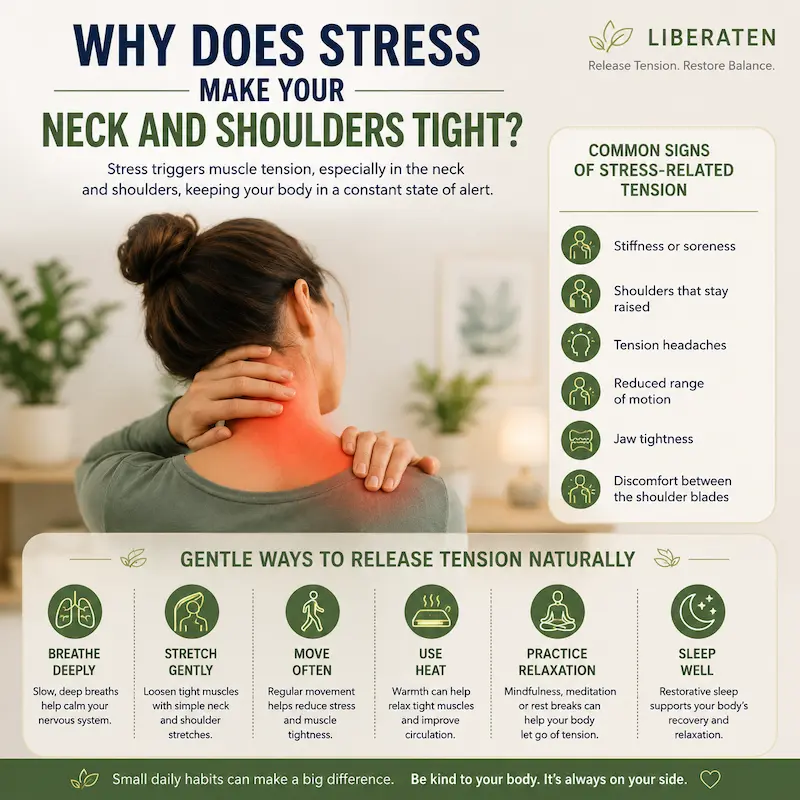
Common Signs of Neck and Shoulders Tight Caused by Stress
Stress affects everyone differently, but some symptoms appear very often.
You may notice:
- tight neck and shoulders
- aching muscles
- limited movement
- shoulders that stay raised without noticing
- tension headaches
- discomfort between the shoulder blades
- jaw tightness alongside neck tension
These signs don’t always mean something serious is wrong. Often, they simply reflect how your body is responding to ongoing physical or emotional stress.
Why the Tension Feels Worse at the End of the Day
Many people feel more stiffness during the evening because muscle tension gradually builds throughout the day.
Hours spent concentrating, working at a computer, driving, or worrying can all contribute to keeping your upper-body muscles active for longer than they need to be.
Why Your Muscles Stay Tight Even After Stress Has Passed
One of the most frustrating experiences is feeling tense even when life seems calm again.
If this sounds familiar, our guide on Why Do I Have Constant Muscle Tension? explains why muscles can remain tense long after stressful situations have ended.
This happens because your nervous system doesn’t always switch off immediately. After repeated stress, your body may need time to recognise that it is safe to relax.
As a result, neck and shoulders tight may continue for days or even weeks while your body slowly returns to a more balanced state.
Daily Habits That Keep Your Neck and Shoulders Tight
Without realising it, you may develop small daily habits that contribute to neck and shoulder tension, especially during stressful or demanding periods.
Here are four common habits to watch for:
- Clenching your jaw: You may tighten your jaw while concentrating or worrying. Try checking occasionally whether your teeth are pressed together, and allow your jaw to rest comfortably.
- Raising your shoulders: When working or feeling stressed, your shoulders may gradually move toward your ears. Pause occasionally and let them return to a comfortable, relaxed position.
- Breathing too shallowly: Stress can change your breathing pattern. Notice whether you’re holding your breath or breathing rapidly, and allow yourself a few slow, comfortable breaths.
- Staying in one position for too long: Long periods of sitting can contribute to stiffness. Change positions regularly and take short movement breaks throughout the day.
These habits may seem insignificant, but becoming more aware of them can help you reduce unnecessary muscle tension.
You don’t need to correct everything at once. If you frequently notice your neck and shoulders tight during the day, start by identifying one habit and making a small, comfortable adjustment whenever you remember.
Gentle Ways to Relieve Neck and Shoulders Tight Naturally
Fortunately, small daily habits can make a meaningful difference over time.
You don’t need intense workouts or complicated routines. Instead, focus on gentle, consistent actions that help your body feel safe and relaxed.
If you often wake up with your neck and shoulders tight, these four gentle practices may help ease stiffness and improve comfort throughout the day.
Gentle Shoulder Rolls
Shoulder rolls are a simple way to introduce movement into tense muscles, especially after sitting or working at a computer for a long time.
Sit or stand comfortably with your arms relaxed at your sides. Slowly lift your shoulders toward your ears, move them gently backward, and then lower them again.
Repeat this movement five times, keeping it slow and comfortable. You can also reverse the direction if it feels natural.
Avoid forcing the movement or pushing through pain. The goal is to encourage gentle mobility and help your shoulders feel less stiff.
Gentle Neck Movements
Slow, comfortable neck movements can help reduce stiffness after long periods of sitting, reading, or working at a computer.
Sit upright with your shoulders relaxed. Slowly turn your head to the right, moving only as far as feels comfortable. Return to the centre, then gently turn your head to the left.
Repeat three to five times on each side, without forcing the movement or trying to stretch beyond your natural range.
Keep your breathing relaxed and avoid sudden movements. Stop if you experience pain, dizziness, or unusual discomfort.
Posture and Movement Breaks
If you often notice your neck and shoulders tight while working at a computer, sitting in the same position for long periods may be contributing to the discomfort.
Try taking a short movement break every 30 to 60 minutes. Stand up, walk around for a minute, and gently lower your shoulders if you notice them creeping toward your ears.
Keep your screen at a comfortable viewing height and allow your arms to rest naturally while typing. Avoid forcing yourself into a rigid, perfectly straight posture.
The goal is not to maintain one ideal position all day, but to change positions regularly and reduce unnecessary muscle tension.
Gentle Warmth and Relaxation
Gentle warmth can help soothe tight neck and shoulder muscles, especially after a long or stressful day.
Try placing a comfortably warm towel over your shoulders for 10 to 15 minutes, or enjoy a warm shower while allowing your shoulders to relax naturally. Make sure the temperature is pleasant rather than hot, and avoid applying heat directly to irritated or injured skin.
While resting, take a few slow, comfortable breaths and gently release any tension you notice in your jaw, neck, or shoulders.
You can make this part of your evening routine to encourage relaxation and help your body unwind before bedtime.
More Ways to Release Physical Tension
These gentle practices are a good starting point, but you can explore additional techniques in our guide, How to Release Physical Tension Naturally.
Remember that relaxation doesn’t need to be forced. Small, comfortable movements and moments of rest can help your muscles gradually release unnecessary tension.
If stress is affecting other areas of your body, you may also find How to Relax Your Body from Stress helpful.
Consistency Matters More Than Intensity
Many people expect instant results, but your body often responds better to regular, gentle care.
Even a few minutes each day of stretching, breathing, or mindful movement can gradually reduce muscle tightness and improve comfort over time.
When Should You Seek Medical Advice?
Although stress is a common cause of muscle tension, persistent pain should not be ignored.
Consider speaking with a healthcare professional if your symptoms:
- become severe
- follow an injury
- include numbness or weakness
- continue for a long time without improvement
- interfere with your normal daily activities
A proper assessment can help identify whether another condition may also be contributing to your symptoms.
Frequently Asked Questions About Neck and Shoulder Tension
Can Stress Cause Tight Neck and Shoulder Muscles?
Yes. Stress can trigger your body’s fight-or-flight response, causing muscles around your neck and shoulders to tighten. When stress continues, this tension may persist even during rest. However, posture, repetitive movements, and other health conditions can also contribute to muscle tightness.
How Can I Relax My Neck and Shoulders After a Stressful Day?
If you finish a stressful day with your neck and shoulders tight, start with gentle shoulder rolls, slow neck movements, and a comfortably warm shower or towel. Take short breaks from sitting and allow your shoulders to rest naturally. Avoid forcing stretches or pushing through pain. A few minutes of comfortable movement and relaxation may help ease stiffness.
Why Do I Carry Stress in My Neck and Shoulders?
During stressful situations, you may unconsciously raise your shoulders, tighten your jaw, or hold your upper-body muscles in a guarded position. Repeating these patterns throughout the day can contribute to persistent tension. Becoming aware of these habits and changing positions regularly may help reduce discomfort.
Final Thoughts
Feeling neck and shoulders tight can be frustrating, especially when you don’t know why it keeps happening. In many cases, your muscles are responding to stress rather than injury, and understanding this connection can help you approach recovery with greater confidence.
For a broader look at how stress affects the whole body, read Stress and Muscle Tension: Why Your Body Stays Tight (and How to Release It).
Small, gentle habits practised consistently can gradually reduce muscle tension and support a calmer nervous system. Progress may take time, but every step that helps your body feel safer and more relaxed is a step toward lasting well-being.