Learning how to recover from chronic stress can take time, especially when your body has been under pressure for weeks, months, or even longer. Even after a stressful period ends, you may still feel tired, tense, restless, or unable to fully switch off.
This can be confusing. You may expect to feel better as soon as the main source of stress disappears, only to discover that your energy, sleep, concentration, or physical tension have not returned to normal yet.
Recovery does not always happen immediately because chronic stress affects more than your thoughts. It can influence your nervous system, muscles, sleep patterns, energy levels, breathing, and everyday habits.
The encouraging part is that recovery is possible. There is no universal timetable, but gentle and consistent changes can help your body gradually move away from constant alertness and toward greater balance.
In this guide, we’ll explore how long recovery may take, why symptoms can linger, what signs may indicate progress, and practical ways to support your body while it recovers.
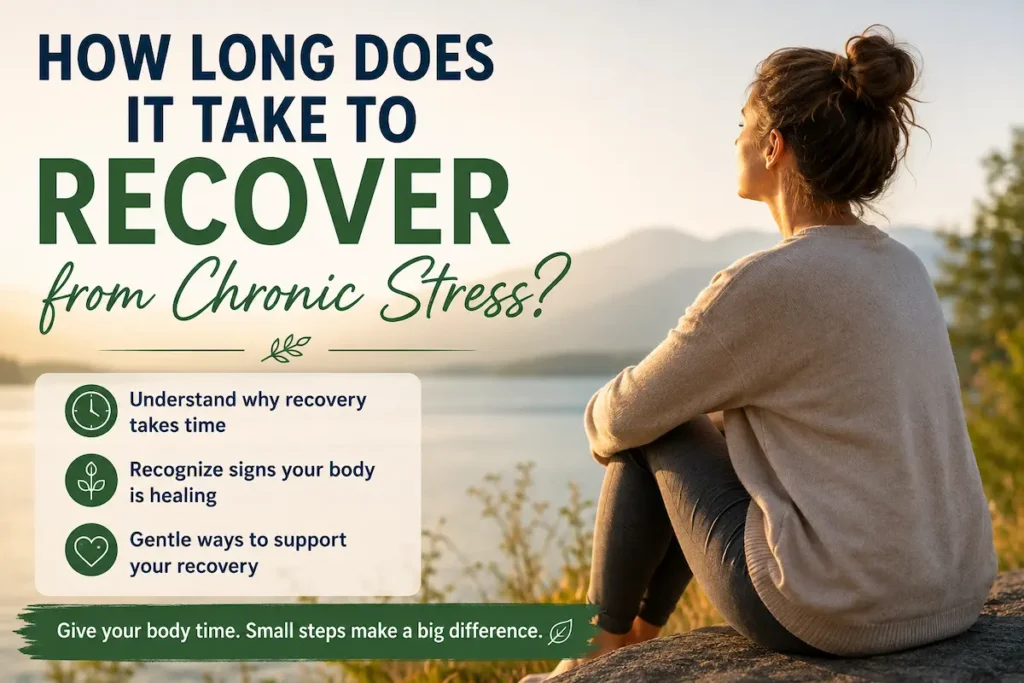
How Long Does It Take to Recover from Chronic Stress?
There is no single amount of time that everyone needs to recover from chronic stress.
Some people begin noticing improvements relatively soon after their main stressors decrease. For others, recovery is more gradual, particularly when stress has been intense or has continued for a long period.
How quickly you recover can depend on factors such as:
- how long you have been under stress,
- how intense the stress has been,
- whether the source of stress is still present,
- your sleep quality,
- your daily responsibilities,
- your physical health,
- the amount of rest and recovery available to you,
- and the habits you use to support your well-being.
Rather than expecting your body to recover according to a fixed schedule, it can be more helpful to look for small signs of improvement.
You may sleep a little better, feel less tense at certain times of day, regain some energy, or notice that stressful situations affect you less intensely than before.
These changes may seem small, but they can be meaningful signs that recovery is taking place.
Why It Can Take Time to Recover from Chronic Stress
Chronic stress develops through repetition.
When your body repeatedly experiences pressure, uncertainty, emotional strain, or overload, the stress response can become a familiar pattern. Your nervous system may spend more time in a state of alertness, while opportunities for genuine recovery become less frequent.
When the stressful period finally eases, your body may not immediately recognize that it can relax.
This helps explain why some people still feel tense or restless during quiet moments and why others remain exhausted even after they begin getting more rest.
Recovery often involves gradually rebuilding a sense of safety and stability rather than simply “switching stress off.”
What Chronic Stress Can Do to Your Body
Stress is a normal biological response designed to help you respond to challenges. In short periods, it can increase alertness and prepare your body to take action.
The difficulty appears when stress becomes persistent.
The American Psychological Association (APA) explains that ongoing stress can affect several systems throughout the body, which helps illustrate why prolonged stress may have both physical and emotional effects.
Ongoing stress can affect several areas of everyday functioning, including:
- sleep,
- muscle tension,
- breathing,
- concentration,
- digestion,
- mood,
- motivation,
- and energy levels.
Over time, these effects can begin reinforcing one another.
For example, stress may interfere with sleep. Poor sleep can then leave you more tired and less able to manage daily pressure, which may increase your sense of stress again.
Why Your Body May Still Feel Stressed When the Stress Is Over
One of the most frustrating parts of recovery is feeling as though your body has not received the message that the difficult period has ended.
You might finally have time to rest but still feel restless.
You may be physically exhausted but struggle to sleep.
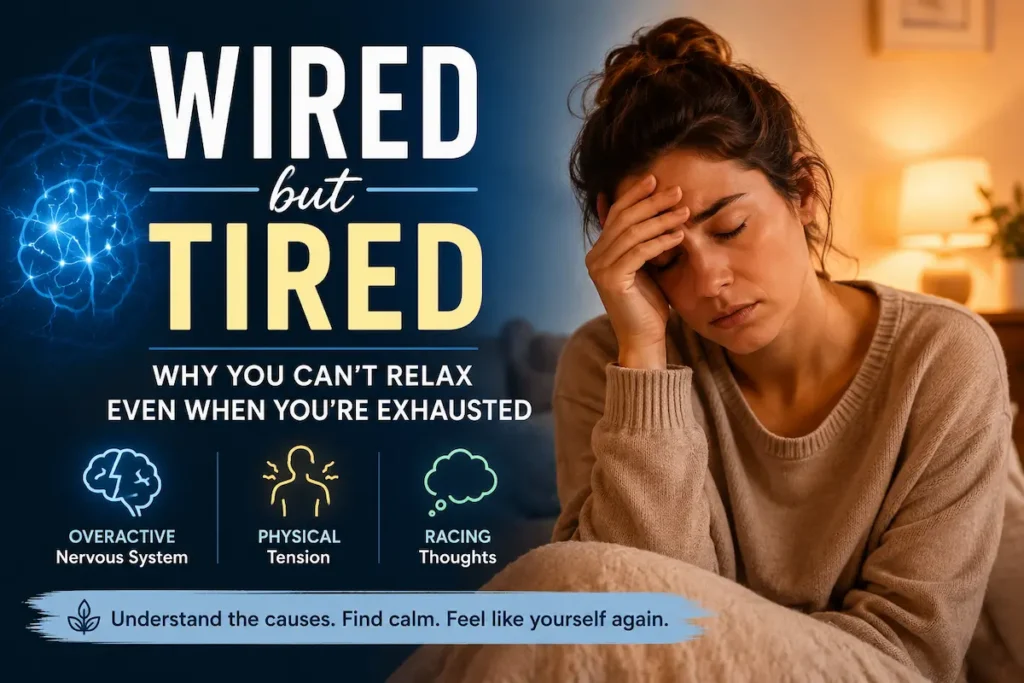
If you feel exhausted while your body still seems unable to switch off, you may also relate to Wired but Tired: Why You Feel Exhausted but Can’t Fully Relax
Your shoulders may remain tense even when you are sitting quietly.
If physical tightness is one of the symptoms that lingers, understanding the connection between stress and muscle tension can help explain why your body may continue holding tension even after the stressful period has eased.
This does not necessarily mean that recovery is not happening. Your body may simply need repeated experiences of rest, safety, predictable routines, and lower stress before old patterns begin to soften.
This can also help explain why relaxation is difficult after stress, even when the original stressful situation has already ended.
That is why trying to force yourself to relax can sometimes create additional frustration.
Why Recovery from Chronic Stress Can Take Longer Than Expected
Many people expect recovery to begin as soon as the stressful situation changes.
In reality, the effects of chronic stress may continue after the original trigger has disappeared.
If you have spent months dealing with pressure, for example, one quiet weekend may feel good without being enough to restore your usual energy and sense of balance.
Recovery can also be affected when some stressors have ended but others remain. Work pressure may improve while financial worries continue. A demanding situation may finish while poor sleep, muscle tension, or exhausting routines remain.
Trying Too Hard to Recover from Chronic Stress Can Add Pressure
It is natural to want to feel better quickly.
However, recovery can itself become another source of pressure if you constantly ask yourself whether you are relaxed enough, sleeping well enough, exercising enough, or recovering fast enough.
Instead of treating recovery as another task to complete perfectly, consider it a gradual process.
A calmer day matters.
A better night of sleep matters.
Taking a walk instead of pushing through exhaustion matters.
Small improvements repeated over time can be more sustainable than dramatic attempts to change everything at once.
Signs You May Be Starting to Recover from Chronic Stress
Recovery is not always obvious.
You may not wake up one morning feeling completely restored. Instead, progress often appears through subtle changes in how your body and mind respond to everyday life.
Possible signs include:
- falling asleep more easily,
- waking with slightly more energy,
- experiencing fewer periods of intense tension,
- breathing more naturally,
- feeling less irritable,
- finding it easier to concentrate,
- enjoying activities again,
- recovering more quickly after stressful situations,
- and feeling more comfortable during quiet moments.
These signs do not have to appear at the same time.
If muscle tightness continues to be a major part of your experience, our guide to constant muscle tension explains why the body can remain tense during prolonged stress.
Recovery from Chronic Stress Is Rarely a Straight Line
You may have several good days followed by a difficult one.
That does not necessarily mean you have lost your progress.
Stress levels naturally change according to sleep, responsibilities, relationships, physical health, and unexpected events. A difficult day can temporarily bring back fatigue, tension, or restlessness.
Instead of judging recovery day by day, it may be more useful to notice broader patterns over several weeks.
You may still become tense, but the tension does not last as long.
At times, you may still feel tired, but you have more periods of normal energy.
Stressful situations may still affect you, but you return to calm more easily afterward.
Those are meaningful forms of progress.
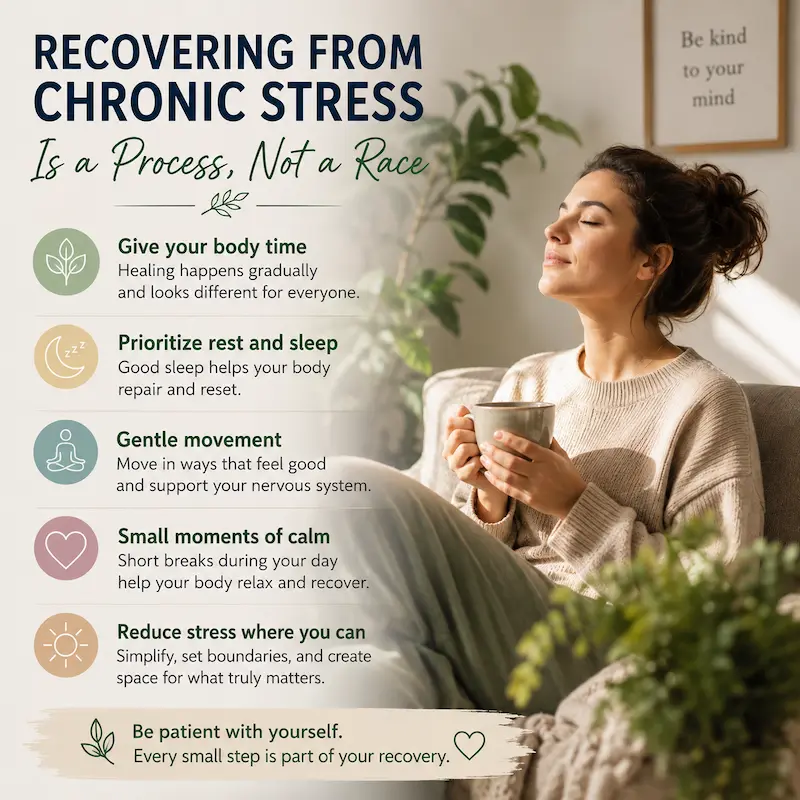
How to Help Your Body Recover from Chronic Stress
There is no single technique that guarantees fast recovery.
A more sustainable approach is to create daily conditions that give your body regular opportunities to rest and regulate itself.
You do not need to change everything at once.
Prioritize Restful Sleep
Sleep gives your body and mind an important opportunity to recover from daily demands.
Try to create a reasonably consistent sleep routine. Going to bed and waking at similar times, reducing stimulation before bedtime, and creating a comfortable sleeping environment can support better rest.
If sleep is difficult, avoid turning bedtime into another performance test. Quiet rest still has value, even when sleep does not happen immediately.
Use Gentle Movement
Movement can help reduce the physical effects of prolonged stress without placing additional pressure on the body.
Walking, gentle stretching, yoga, or comfortable mobility exercises can all be useful options.
The goal is not necessarily to exercise harder. During periods of recovery, your body may respond better to regular, manageable movement than to intense activity that leaves you more depleted.
If your stress is showing up mainly as muscle tightness, you may also find How to Release Physical Tension Naturally helpful.
Create Small Periods of Calm
You do not need hours of meditation to support recovery.
A few minutes of slow breathing, sitting outside, listening to music, stretching, or simply doing nothing can create small interruptions in the cycle of constant stimulation.
These moments may seem insignificant individually, but repeated throughout the week they can help make calm feel more familiar.
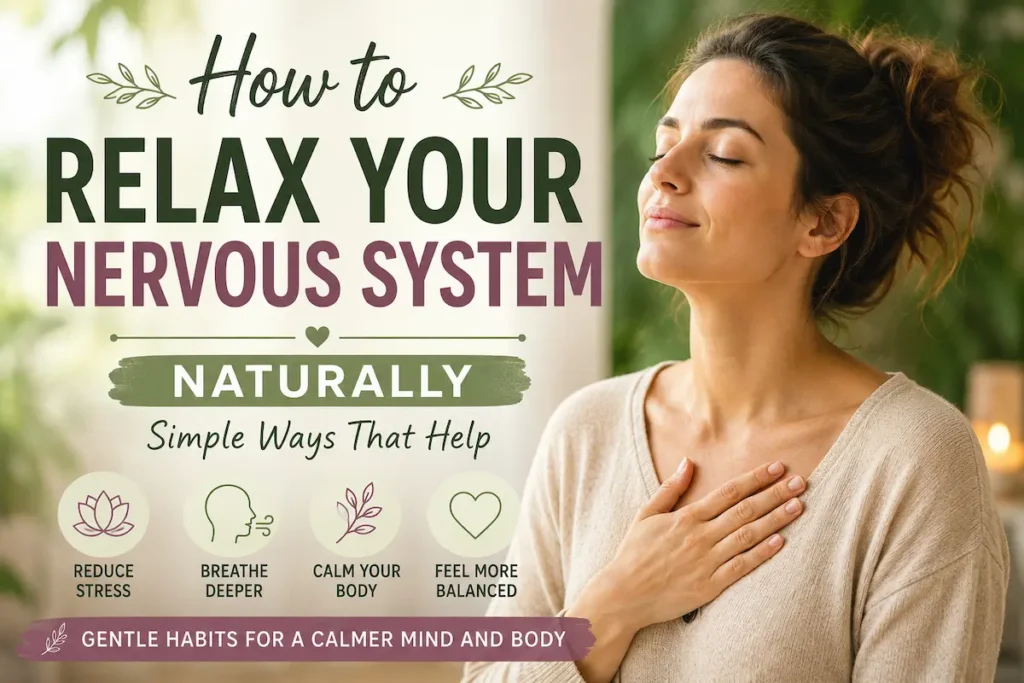
You can also explore how to relax your nervous system naturally for additional gentle ways to support this process.
Reduce Stress Where You Can
Relaxation techniques can help, but they cannot compensate for unlimited stress.
Sometimes recovery requires reducing unnecessary demands.
Ask yourself whether there are responsibilities that can be postponed, simplified, delegated, or approached differently.
Not every source of stress can be removed. However, reducing even a small amount of avoidable pressure can give your body more room to recover.
Build Consistent Daily Habits
Consistency often matters more than intensity.
A short daily walk may be more useful than an exhausting workout once every two weeks. Five minutes of calm breathing each day may be easier to sustain than an ambitious relaxation routine you quickly abandon.
Simple habits can create a more predictable environment for recovery.
What Can Make It Harder to Recover from Chronic Stress?
Sometimes recovery feels slow because the body is still receiving many of the same signals that contributed to stress in the first place.
Possible factors include:
- ongoing work or family pressure,
- insufficient sleep,
- constant digital stimulation,
- little time for rest,
- excessive caffeine,
- irregular routines,
- social isolation,
- lack of physical movement,
- and unrealistic expectations about recovery.
This does not mean you need to eliminate every stressor.
Instead, look for one or two areas where a realistic change could reduce your overall load.
Ongoing Stress Can Delay Recovery
It is difficult for the body to move fully into recovery when significant stress continues every day.
This is why self-care should not be understood only as adding relaxation exercises to an overloaded schedule.
Sometimes the most helpful change is creating more space.
That could mean taking more breaks, setting boundaries, reducing unnecessary commitments, asking for support, or allowing yourself to do less for a while.
Can You Fully Recover from Chronic Stress?
Many people worry that prolonged stress has permanently changed the way they feel.
The body is adaptable, and supportive changes can help many people regain energy, reduce tension, sleep better, and feel more balanced over time.
However, recovery is individual, and persistent symptoms should not automatically be attributed to stress.
Fatigue, pain, sleep problems, changes in mood, or other symptoms can have many possible causes.
When to Seek Professional Support
Consider speaking with a qualified healthcare professional if symptoms are severe, persistent, worsening, or significantly affecting your daily life.
Professional support is especially important when you experience symptoms that are new, unexplained, or concerning.
A healthcare professional can help determine whether stress is contributing to what you are experiencing and whether another physical or mental health condition needs attention.
Seeking appropriate support can be part of recovery rather than a sign that you have failed to manage stress on your own.
Final Thoughts: Give Your Body Time to Recover from Chronic Stress
There is no universal deadline to recover from chronic stress.
Recovery may begin with very small changes: a deeper breath, a better night’s sleep, less muscle tension, a little more energy, or a moment when you suddenly realize that you feel calm.
Instead of asking your body to recover as quickly as possible, try creating conditions that make recovery easier.
Rest when you need it.
Move gently.
Reduce unnecessary pressure where possible.
Build simple routines that support sleep, calm, and physical well-being.
And pay attention to gradual progress rather than expecting every day to feel better than the one before.
Your body may have spent a long time adapting to stress. Giving it consistent opportunities to rest and recover can help it gradually adapt to greater calm as well.
Frequently Asked Questions About Recovering from Chronic Stress
How long does it usually take to recover from chronic stress?
There is no universal recovery time. The process varies depending on how long stress has been present, its intensity, whether stressors are ongoing, sleep quality, general health, and individual circumstances.
Some improvements may appear earlier than others. Energy, sleep, concentration, mood, and physical tension do not necessarily recover at exactly the same pace.
Why am I still tired after the stressful period has ended?
Fatigue can persist after a demanding period because recovery may take time. Sleep disruption, ongoing tension, reduced activity, and continued daily pressures can also contribute.
However, persistent or unexplained fatigue can have causes unrelated to stress, so consider discussing it with a healthcare professional if it continues or concerns you.
Why do I still feel tense when I am resting?
Your muscles and nervous system may have become accustomed to frequent activation during prolonged stress.
Physical rest does not always produce immediate relaxation. Gentle movement, regular rest, comfortable breathing, and reduced daily pressure may gradually help your body become more comfortable with calm again.
Does sleep help you recover from chronic stress?
Healthy sleep is an important part of physical and emotional recovery. It supports many processes involved in maintaining energy, concentration, mood, and overall health.
Sleep is not the only factor, however. Recovery may also benefit from manageable daily routines, movement, social support, reduced stressors, and appropriate professional care when needed.
Can exercise help you recover from chronic stress?
Regular physical activity can be a useful part of stress management and general well-being.
During periods of exhaustion, gentle and sustainable movement may feel more manageable than intense exercise. Walking, stretching, or other comfortable activities can be a good place to begin, depending on your health and circumstances.