Tense all the time? If you often feel physically tense, even when there seems to be no obvious reason, you’re not alone. Many people live with chronic body tension without realizing that stress, emotional pressure, and nervous system dysregulation can keep the body in a constant state of alertness.
In fact, feeling tense all the time can affect your sleep, your energy levels, your mood, and your overall quality of life. You may notice tight muscles, jaw clenching, headaches, shoulder pain, or a constant feeling that your body simply cannot relax.
In this article, we’ll explore why chronic body tension happens, how stress affects the nervous system, and some gentle ways to help your body feel safe, calm, and relaxed again.
If you want to understand how stress affects the body, you may also find helpful our article about why stress causes physical tension.
Why Am I Tense All the Time?
In many cases, if you feel tense all the time, your body may be responding to prolonged stress. Even when the original source of stress has disappeared, your nervous system can remain in a state of heightened alertness.
Originally, this survival response was designed to protect us from danger. However, when stress becomes chronic, the body may continue behaving as if a threat is still present. As a result, muscles remain contracted, breathing becomes shallow, and relaxation feels increasingly difficult.
However, many people experiencing chronic body tension do not realize that their physical symptoms may be related to stress rather than to a physical injury or illness.
Common Signs When You Feel Tense All the Time
Chronic body tension can appear in many different ways. Some symptoms are obvious, while others develop gradually over time.
Common signs include:
- Tight shoulders and neck muscles
- Jaw clenching or teeth grinding
- Frequent headaches
- Back pain or muscle stiffness
- Shallow breathing
- Digestive discomfort
- Fatigue and low energy
- Difficulty relaxing or falling asleep
- Feeling constantly “on edge”
If several of these symptoms sound familiar, your body may be holding more stress than you realize.
Many of these symptoms are common physical manifestations of stress and nervous system dysregulation.
Why Do Some People Stay Tense All the Time?
Your nervous system plays a central role in how your body responds to stress. When you experience emotional or physical stress, your body activates its fight-or-flight response.
The Body Learns to Stay Alert
Over time, after prolonged periods of stress, the nervous system may become accustomed to remaining in a protective state. As a result, even when external circumstances improve, the body may continue reacting as though danger still exists. This can also explain why many people find it difficult to relax after experiencing prolonged stress.
This is one reason why many people ask themselves, “Why am I tense all the time?” even when their lives seem relatively stable.
Physical Tension Becomes a Habit
Moreover, over time, muscle tension can become automatic. The body learns to hold stress in certain areas, such as the shoulders, neck, chest, jaw, or abdomen.
Without conscious awareness, these patterns may continue for months or even years.
According to the World Health Organization (WHO), chronic stress can affect both physical and mental health, contributing to muscle tension, fatigue, sleep problems, and other symptoms.
If you experience persistent tightness in your body, you may also find our article on constant muscle tension helpful, where we explore how chronic stress can keep muscles in a prolonged state of tension.
How to Stop Feeling Tense All the Time Naturally
Instead, the goal is not to force the body to relax, but to help it feel safe enough to do so naturally.
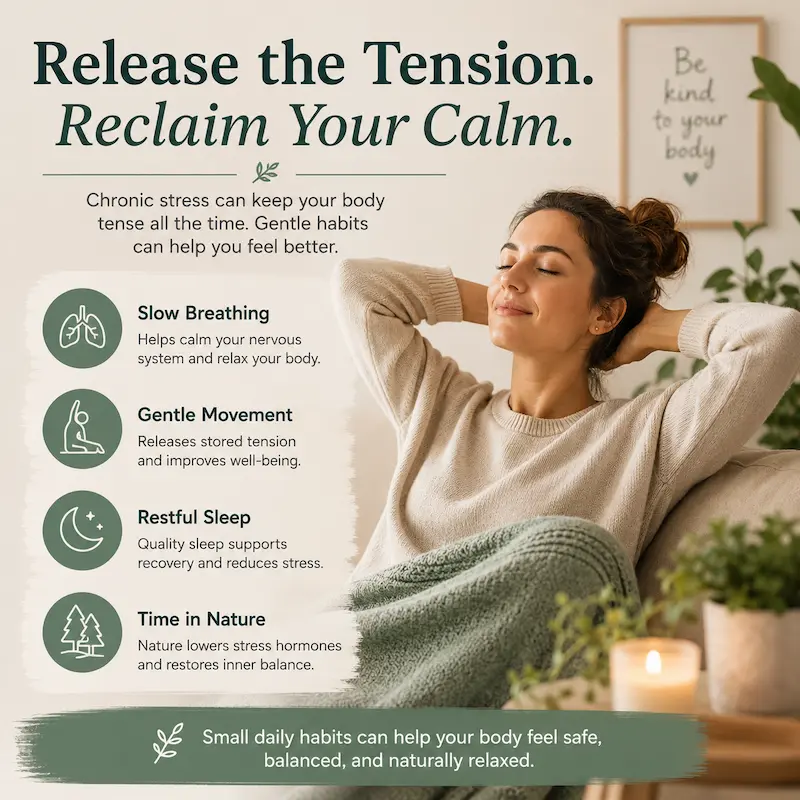
Practice Slow Breathing
Slow, gentle breathing helps activate the parasympathetic nervous system, which supports relaxation and recovery.
Try breathing in slowly through your nose for four seconds and breathing out gently for six seconds.
Learning how to calm the nervous system is often one of the most effective ways to reduce chronic body tension.
Move Your Body Gently
Similarly, walking, stretching, yoga, or light movement can help release accumulated physical tension without overwhelming the nervous system.
The objective is not exercise performance, but helping your body feel safe and comfortable.
Improve Your Sleep Routine
Unfortunately, poor sleep and chronic tension often reinforce each other. Creating a calm bedtime routine can help reduce nervous system activation and improve recovery.
Spend Time in Nature
In addition, natural environments can help reduce stress hormones and promote feelings of safety and calmness.
Even a short daily walk outdoors may help lower physical tension over time.
Small Daily Habits That Can Help
Fortunately, if you feel tense all the time, small daily actions often work better than dramatic changes.
Consider:
- Taking short breaks during the day
- Practicing body awareness exercises
- Reducing overstimulation
- Spending time outdoors
- Prioritizing rest and sleep
- Practicing self-compassion
Small habits performed consistently can gradually help your body relearn how to relax.
Small daily actions can gradually reduce stress and improve physical and emotional wellbeing.
Final Thoughts
Finally if you have been feeling tense all the time, remember that your body is not working against you. In many cases, chronic body tension is simply a sign that your nervous system has been trying to protect you for a long time.
With patience, awareness, and gentle daily practices, it is possible to help your body feel safe again and gradually recover its natural ability to relax.
If you’re ready to move beyond understanding the causes of tension, discover how to release physical tension naturally with gentle breathing, movement, and healthy daily habits.