How to relax your body from stress can feel difficult when your body is constantly tense, tired, or overwhelmed.
The problem is not that you are doing something wrong. The body does not relax through pressure — it relaxes when it feels safe.
Stress often builds up in your muscles, breathing, and nervous system. Over time, this can make it hard to switch off and truly rest.
In this guide, you’ll discover simple and natural ways to relax your body from stress, release tension, and gently restore a sense of calm.
What Happens When Stress Stays in the Body
Sometimes the difficulty is not only stress itself, but understanding why your body never fully relaxes even when you try to rest.
When stress continues over time, its physical effects can persist even during moments of rest. Your muscles may remain tense, your breathing may become shallow, and your nervous system may stay more alert than usual. These responses can make it difficult to relax your body from stress, even when you are trying to rest.
This is why learning how to relax your body from stress is not only helpful — it is essential for your well-being.
If you want to understand this process more deeply, you can read how stress accumulates in the body.
Why It Is Hard to Relax the Body from Stress
Stress is not only a mental experience. It also affects the body directly. When you feel overwhelmed, your nervous system stays activated, and your muscles tighten without you noticing.
This connection between stress and physical tightness can become more persistent over time. Understanding why stress and muscle tension are so closely connected can help explain why your muscles may stay tense even when you are trying to rest.
Over time, this creates physical tension that can be hard to release. That’s why learning how to relax your body naturally is so important.
Persistent body tension can contribute to low energy from stress and make daily activities feel more difficult.
Some physical signs of stress may appear gradually through body tension, fatigue, chest tightness, headaches, or nervous system overload. Recognizing those signs early may help support both emotional balance and physical recovery.
How to Relax Your Body from Stress (Simple Techniques That Work)
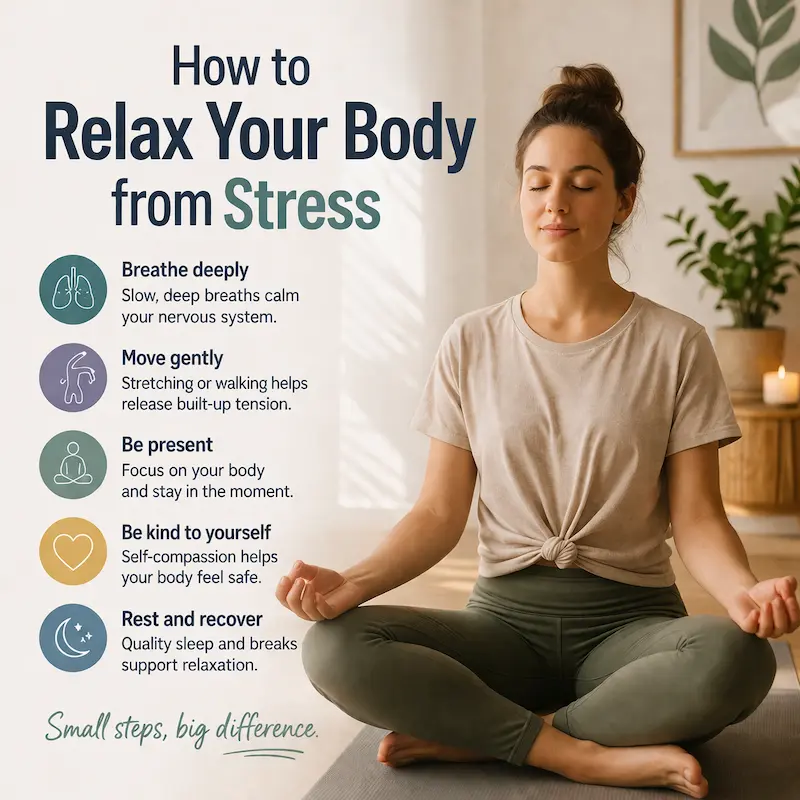
Learning how to relax your body from stress takes time, but even small steps can make a big difference.
You can also learn how to release stress from the body step by step to go deeper into practical techniques.
Use Slow Breathing to Calm Your Nervous System
Slow, comfortable breathing is one of the simplest ways to help your body settle when stress makes you feel tense or overwhelmed. You don’t need special equipment or a long relaxation session to begin.
Try this gentle two-minute breathing exercise:
- Find a comfortable position. Sit with your feet resting on the floor, or lie down somewhere quiet. Let your shoulders soften naturally.
- Breathe in slowly. Inhale gently through your nose for about four seconds, without forcing a deep breath.
- Breathe out comfortably. Exhale slowly for about six seconds, or for as long as feels natural.
- Repeat at your own pace. Continue for approximately two minutes, allowing your breathing to remain relaxed and comfortable.
- Notice how you feel. Pay attention to your shoulders, jaw, and abdomen without trying to force them to relax.
If counting makes you uncomfortable, simply breathe a little more slowly than usual. Stop or return to your normal breathing if you feel dizzy, short of breath, or uncomfortable.
This short practice may help reduce feelings of stress and make it easier to relax your body from stress during a busy day. You can repeat it whenever you need a gentle moment of calm.
How to Relax Your Body from Stress with Gentle Movement
Gentle movement can help your body feel more comfortable when stress leaves you restless, stiff, or physically overwhelmed. You don’t need an intense workout. A few simple movements can help you reconnect with your body and create a moment of calm.
Try this gentle three-minute movement routine:
- Shake out your hands (30 seconds). Let your arms hang comfortably and gently shake your hands to release unnecessary tension. Keep the movement light and relaxed.
- March slowly in place (one minute). Stand comfortably and take small, gentle steps without rushing. If standing is uncomfortable, try alternating your feet while seated.
- Open and relax your hands (30 seconds). Slowly spread your fingers, then let your hands soften. Repeat several times without squeezing or forcing the movement.
- Walk at a comfortable pace (one minute). Move slowly around the room, allowing your arms to swing naturally. Focus on comfortable movement rather than speed.
Finish by standing or sitting quietly for a few moments. Notice whether your breathing feels more comfortable or your body feels a little less restless.
These gentle movements may help you relax your body from stress without adding unnecessary physical effort. Adjust or skip any movement that causes pain, dizziness, or discomfort.
How to Relax Your Body from Stress by Releasing Muscle Tension
Many people carry tension without realizing it. Bringing awareness to your body can help you notice where stress is stored.
By gently relaxing those areas, you can start to release physical stress and feel more at ease.
You can also explore a more detailed step-by-step method to release stress from the body.
If stress mainly affects your neck and shoulders, our guide Why Does Stress Make Your Neck and Shoulders Tight? offers a closer look at why this area becomes tense and how gentle daily habits may help.
How to Relax Your Body from Stress Step by Step
Understanding why physical tension develops can make relaxation techniques more effective.
If you want to relax your body from stress, try this simple five-minute body awareness routine. It focuses on noticing physical sensations and allowing your muscles to rest without forcing relaxation.
A gentle five-minute body relaxation routine:
- Minute 1 — Get comfortable. Sit or lie down in a position that feels supportive. Let your arms rest naturally and allow your breathing to settle at its own pace.
- Minute 2 — Notice your face and jaw. Bring your attention to your forehead, eyes, and jaw. Notice any tightness without trying to change it immediately. If comfortable, allow your jaw to soften.
- Minute 3 — Check your shoulders and arms. Notice whether your shoulders feel raised or your hands are clenched. Let your arms rest comfortably and release any unnecessary effort.
- Minute 4 — Notice your abdomen and legs. Gently shift your attention to your abdomen, hips, and legs. Observe how these areas feel against the chair, bed, or floor.
- Minute 5 — Rest without expectations. Allow your attention to settle on your body as a whole. Breathe naturally and notice any sensations of comfort, warmth, or ease.
You don’t need to feel completely relaxed for this exercise to be useful. Some days you may notice a little more comfort, while other days your body may remain tense. Both experiences are normal.
If focusing on bodily sensations makes you uncomfortable, open your eyes, look around the room, or stop the exercise.
Practising this short routine regularly may help you become more aware of your body’s signals and gradually develop a calmer response to everyday stress.
Daily Habits to Keep Your Body Relaxed
Learning how to relax your body from stress becomes easier when you create small opportunities for rest throughout the day. You don’t need to change your entire routine. A few gentle habits can help you manage daily stress and feel more comfortable in your body.
Try incorporating these five simple habits into your day:
- Begin your morning without rushing. Before checking your phone or starting work, take a moment to breathe comfortably, stretch gently, or simply sit quietly.
- Take regular screen breaks. If you spend long periods at a computer, stand up or change position every 30 to 60 minutes. Even a brief pause can help reduce stiffness and mental fatigue.
- Create a calming transition after work. Take a short walk, listen to relaxing music, or spend a few minutes doing something enjoyable before moving into your evening activities.
- Give yourself permission to rest. You don’t have to be productive every moment. Short periods of genuine rest can help you recover from a demanding day.
- Prepare your body for sleep. Reduce stimulating activities before bedtime, keep your sleeping environment comfortable, and establish a relaxing evening routine.
You don’t need to practise all five habits immediately. Choose one that feels manageable and gradually build from there.
These small adjustments can complement the breathing, movement, and body awareness exercises described above, helping you create a more balanced daily routine.
Daily stress management techniques can help reinforce these changes over time.
Final Thoughts on How to Relax Your Body from Stress
Relaxation takes time. However, even small steps can create noticeable changes in how your body feels.
Learning how to relax your body from stress is not about forcing results, but about allowing your body to feel safe again.
With simple techniques and gentle awareness, you can release tension, support your nervous system, and create a deeper sense of calm in your daily life.
Start small, stay consistent, and trust the process. Over time, your body will naturally learn how to relax again.
Frequently Asked Questions About How to Relax Your Body from Stress
❓ How can I relax my body from stress quickly?
Slow breathing and gentle movement are two of the fastest ways to relax your body. Even a few minutes can help reduce tension.
❓ Why does my body feel tense all the time?
Chronic stress keeps the nervous system activated, which leads to ongoing muscle tension and physical discomfort.
According to the American Psychological Association, chronic stress can have significant effects on the body and overall health.
You may also find our complete guide on how to release physical tension naturally helpful, especially if muscle tightness has become part of your daily life.