Physical signs of stress can appear in the body long before we fully realize how overwhelmed we feel emotionally or mentally. Stress does not only affect thoughts and emotions. It can also create muscle tension, shallow breathing, headaches, digestive discomfort, fatigue, and a constant feeling of pressure inside the body.
Many people experience physical symptoms of stress every day without understanding where those sensations come from. Over time, stress stored in the body may affect sleep, energy levels, emotional balance, and even the nervous system itself.
In this article, you will discover some common physical signs of stress and gentle ways to help your body release tension naturally.
Common Physical Signs of Stress in the Body
Stress often appears physically because the body constantly reacts to pressure, uncertainty, emotional overload, or prolonged tension. Sometimes the signs are obvious. Other times, they become part of daily life so gradually that people stop noticing them.
Muscle tension and body stiffness
One of the most common physical signs of stress is muscle tension. The shoulders, neck, jaw, back, and chest often hold stress for long periods of time.
When stress accumulates in the body, muscles may remain slightly contracted even during rest. This can create stiffness, discomfort, jaw tension, or a constant feeling that the body never fully relaxes.
Over time, body tension from stress may also affect posture, breathing patterns, and overall physical comfort.
For a deeper explanation of why muscles stay tense and how to support recovery, see Stress and Muscle Tension: Why Your Body Stays Tight (and How to Release It).
Fatigue and low energy
Stress can keep the nervous system in a prolonged state of alertness. Even when someone sleeps enough hours, the body may still feel exhausted.
This happens because emotional stress in the body often consumes physical and mental energy continuously. Many people feel tired, emotionally drained, or physically heavy without understanding that stress may be contributing to those sensations.
Fatigue related to stress is not always caused by physical effort. Sometimes it comes from carrying emotional pressure internally for too long.
Many people who experience physical signs of stress also find themselves feeling always tired, even after getting enough sleep.
Shallow breathing and nervous system overload
Another important sign of stress in the body is shallow or restricted breathing. When the nervous system feels overwhelmed, breathing patterns often become faster, shorter, or more tense.
This may create sensations of tightness in the chest, restlessness, or difficulty relaxing fully.
Over time, nervous system overload may keep the body in a constant “fight or flight” state, making it harder to feel calm, safe, or emotionally balanced.
If you would like to understand the underlying reason behind these symptoms, you may also find helpful our article on why stress causes physical tension in the body.
Recognizing these symptoms is an important first step, but consistent habits for stress relief can also help reduce their impact over time.
One of the most common physical symptoms is constant muscle tension, which can affect the neck, shoulders, jaw, back, and other areas of the body.
Neck and shoulder stiffness is one of the most common physical signs of stress. Read Why Does Stress Make Your Neck and Shoulders Tight? to understand why this happens and discover simple ways to ease muscle tension.
Why Stress Often Appears Physically
Stress affects both the mind and the body. When emotional pressure continues for long periods of time, the nervous system may remain in a constant state of alertness. As a result, physical signs of stress can gradually appear in different parts of the body.
Many people focus only on emotional symptoms like worry or anxiety. However, stress stored in the body may also create muscle tension, digestive discomfort, headaches, fatigue, sleep problems, or breathing difficulties.
According to the Mayo Clinic, stress can affect both the body and the mind in many different ways.
In many cases, the body reacts before the mind fully recognizes how overwhelmed a person actually feels.
The connection between stress and the nervous system
The nervous system plays an important role in how the body reacts to stress. When stress levels remain high for too long, the body may stay trapped in a “fight or flight” response.
This state can increase muscle tension, raise heart rate, affect breathing patterns, and make relaxation more difficult.
Learning how to relax your nervous system naturally may help the body feel calmer and more balanced over time.
Over time, nervous system overload may leave the body feeling tense even during moments of rest.
Physical Signs of Stress That Many People Experience
Physical symptoms of stress can vary from person to person. Some signs are subtle, while others become more noticeable over time.
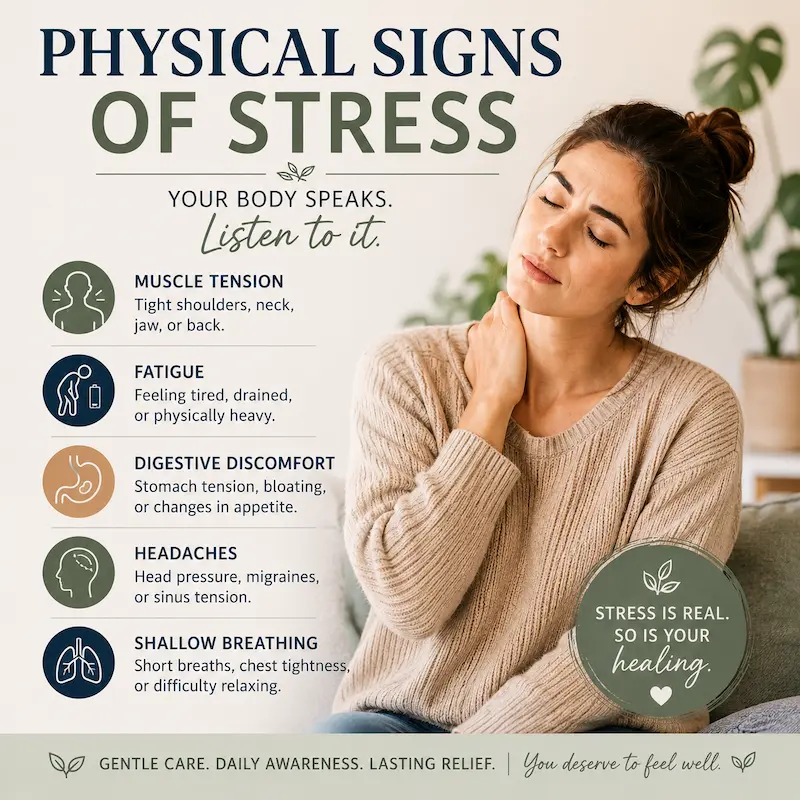
Physical Signs of Stress in the Head, Jaw, and Body
Stress can create physical pressure in the body, especially around the jaw, neck, shoulders, and back. Many people unconsciously tighten their muscles throughout the day without realizing it.
This body tension from stress may eventually contribute to headaches, jaw discomfort, stiffness, or chronic pain sensations.
When the body rarely relaxes fully, tension may slowly accumulate over time.
Digestive discomfort and stomach tension
The digestive system is also closely connected to emotional stress. When the nervous system feels overwhelmed, digestion may slow down or become more sensitive.
Some people experience stomach tension, bloating, digestive discomfort, or changes in appetite during stressful periods.
These physical signs of stress are very common, especially when emotional pressure continues for long periods without enough recovery or relaxation.
Fatigue as One of the Physical Signs of Stress
Stress can affect sleep quality even when someone feels physically tired. The mind and body may remain too alert to rest deeply.
As a result, many people wake up feeling exhausted, mentally overwhelmed, or physically drained.
This type of fatigue often appears when emotional stress in the body continues accumulating without enough moments of calm or recovery.
Gentle Ways to Release Stress from the Body
The body usually responds better to calm, gradual, and gentle approaches than to forcing relaxation aggressively. Small daily habits may help the nervous system feel safer and more balanced over time.
Slow breathing and conscious pauses
Slow breathing may help reduce physical tension and calm the nervous system naturally. Gentle breathing exercises can support relaxation by helping the body leave survival mode little by little.
Even a few conscious pauses during the day may help reduce stress symptoms and improve body awareness.
Movement, stretching, and body awareness
Gentle movement can help release stress stored in the body. Walking slowly, stretching, or paying attention to physical sensations may help reconnect the body with a greater sense of calm.
Simple techniques to relax your body from stress may also support emotional balance and physical recovery over time.
Body awareness is important because many people carry tension automatically without noticing it.
Learning to listen to the body with more attention may support both emotional balance and physical relaxation over time.
Understanding the physical signs of stress can also help explain why relaxation is difficult after stress for many people.
Many people experience these symptoms without understanding why they persist. If this sounds familiar, read our guide on why you may feel tense all the time.
Once you’ve learned to recognize these symptoms, the next step is discovering how to release physical tension naturally through practical techniques that support long-term recovery.